Research Use Only: This product is supplied for laboratory research and in-vitro studies. Not for human or veterinary administration.
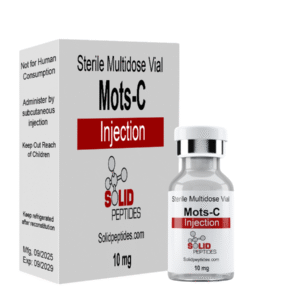
Hover to zoom
Identity Verified: LC-MS
(0 Reviews)
MOTS-c
MOTS-c is a 16-amino acid mitochondrial-derived peptide (MDP) encoded within the mitochondrial 12S rRNA gene. Research shows it regulates metabolic homeostasis, insulin sensitivity, and skeletal muscle function through AMPK activation and metabolic reprogramming.
- Mechanistic pathway studies
- In vitro receptor profiling
- HPLC verified identity and purity
$26.00In Stock
Ships same-day if ordered before 2PM EST
1
Encrypted Checkout
Global Express
Research Overview
MOTS-c (Mitochondrial Open Reading Frame of the 12S rRNA-c) is a 16-amino acid peptide encoded within the mitochondrial 12S ribosomal RNA gene (MT-RNR1), representing a novel class of bioactive molecules called mitochondrial-derived peptides (MDPs). Discovered in 2015 by Lee et al., MOTS-c demonstrates metabolic regulatory functions including enhanced insulin sensitivity, glucose uptake stimulation in skeletal muscle, and AMPK pathway activation. Research shows it acts as a retrograde signaling molecule, translocating to the nucleus during metabolic stress to regulate nuclear gene expression and coordinate cellular metabolic responses. Studies demonstrate its role in metabolic homeostasis, mitochondrial function, exercise adaptation, and age-related metabolic decline.
Mechanism of Action
MOTS-c exerts metabolic effects through multiple mechanisms: (1) AMPK Activation - stimulates AMP-activated protein kinase (AMPK) in skeletal muscle, enhancing glucose uptake and fatty acid oxidation; (2) Metabolic Reprogramming - shifts cellular metabolism toward oxidative phosphorylation and away from glycolysis; (3) Nuclear Translocation - during metabolic stress, MOTS-c translocates to the nucleus where it regulates expression of nuclear genes involved in antioxidant response and metabolic adaptation via ARE (antioxidant response element) binding; (4) Insulin Sensitivity - enhances insulin-stimulated glucose uptake in muscle and adipose tissue through improved insulin receptor signaling; (5) Mitochondrial Function - modulates mitochondrial metabolism and protects against metabolic stress-induced mitochondrial dysfunction; (6) Folate-Methionine Cycle Regulation - regulates one-carbon metabolism pathways critical for cellular methylation and redox homeostasis.
“Mechanistic summaries on this page are provided for laboratory reference and should be interpreted within controlled experimental settings only.”
Preclinical Research Summary
Mouse studies demonstrate MOTS-c administration prevents high-fat diet-induced obesity, improves glucose tolerance (30-40% reduction in glucose AUC), and enhances insulin sensitivity. Exercise studies show MOTS-c levels increase 1.5-2-fold after physical activity and mediate some beneficial metabolic adaptations to exercise. Age-related research reveals MOTS-c levels decline with aging, and exogenous administration reverses age-dependent insulin resistance in older mice. Skeletal muscle studies confirm MOTS-c stimulates glucose uptake through AMPK-dependent and AMPK-independent mechanisms, with effects comparable to metformin in some models. Genetic polymorphism studies (m.1382A>C variant, K14Q substitution) show population-level associations between MOTS-c variants and longevity in elderly Japanese cohorts. Cell culture studies demonstrate MOTS-c protects against oxidative stress, enhances mitochondrial respiration, and promotes metabolic flexibility. Pharmacokinetic studies show intraperitoneal MOTS-c reaches peak plasma levels within 15-30 minutes with tissue accumulation in skeletal muscle, liver, and adipose tissue.
Academic References
1. Lee C, et al. (2015). MOTS-c is a mitochondrial-encoded regulator of skeletal muscle and whole-body metabolism. Cell Metab. 21(3):443-454. doi:10.1016/j.cmet.2015.02.019 [Discovery paper demonstrating metabolic regulatory functions]
2. Fuku N, et al. (2015). The mitochondrial-derived peptide MOTS-c is a regulator of skeletal muscle and whole-body metabolism. Nat Commun. 6:8480. doi:10.1038/ncomms9480 [m.1382A>C polymorphism and longevity association]
3. Reynolds JC, et al. (2021). MOTS-c is an exercise-induced mitochondrial-encoded regulator of age-dependent physical decline and muscle homeostasis. Nat Commun. 12(1):470. doi:10.1038/s41467-020-20790-0 [Exercise-induced MOTS-c and age-related effects]
4. Kim KH, et al. (2018). MOTS-c regulates skeletal muscle and whole-body metabolism. Physiol Rev. 98(4):2293-2319. [Comprehensive mechanism review]
5. Lu H, et al. (2019). MOTS-c peptide regulates adipose homeostasis to reduce obesity and diabetes. JCI Insight. 4(6):e123692. doi:10.1172/jci.insight.123692 [Adipose tissue effects]
6. Ming W, et al. (2021). MOTS-c reduces myocardial infarction injury through mitochondrial quality control. Theranostics. 11(11):5362-5378. [Cardioprotective effects]
7. D'Souza RF, et al. (2020). Circulatory MOTS-c levels are associated with insulin sensitivity in lean but not obese individuals. Physiol Rep. 8(7):e14416. [Human plasma MOTS-c and insulin sensitivity correlation]
8. Kumagai H, et al. (2021). Maternal physical activity and MOTS-c levels. Sci Rep. 11(1):13227. [Maternal-fetal transfer and exercise effects]
9. Cataldo LR, et al. (2022). MOTS-c plasma levels and genetic variants are associated with obesity. Obesity. 30(2):508-518. [Human genetic variants and metabolic phenotypes]
10. Rochette L, et al. (2023). Mitochondrial-derived peptides: MOTS-c, humanin, and SHLP. Pharmacol Res. 189:106689. [Recent comprehensive review of MDPs]
This product is intended exclusively for in vitro laboratory research by qualified professionals. Not for human consumption. Not approved by the FDA.
Published Research Briefs
Our research team has published evidence-checked briefs covering the science behind this compound. Each brief reviews primary sources and grades claims independently.