Research Use Only: This product is supplied for laboratory research and in-vitro studies. Not for human or veterinary administration.
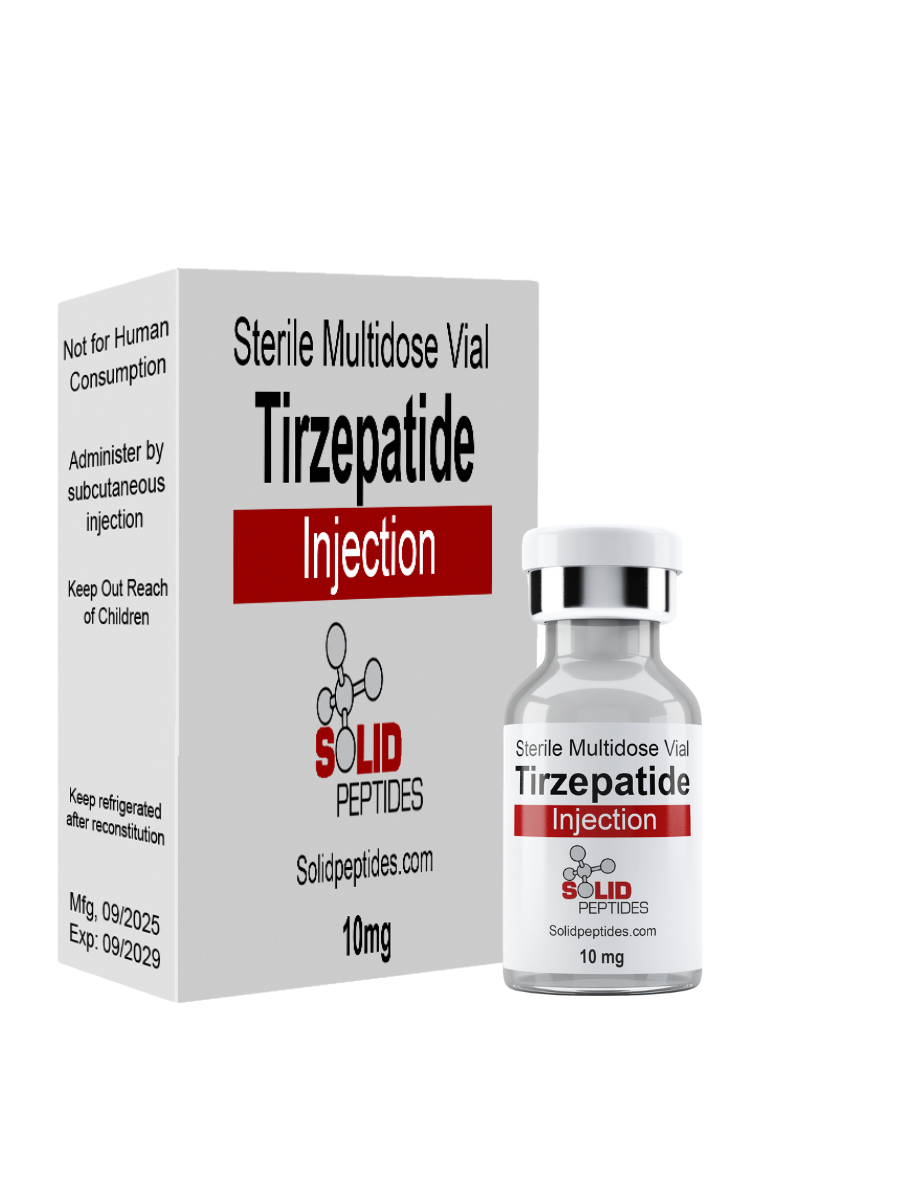
T -GLP-1 (60mg)
- First-in-class synthetic 39-amino acid dual GIP/GLP-1 receptor agonist ('twincretin') with imbalanced receptor binding profile and biased signaling at GLP-1R
- FDA-approved May 2022 (Mounjaro for T2D), November 2023 (Zepbound for obesity), December 2024 (Zepbound for OSA) — extensively validated in 2,000+ peer-reviewed publications
- Engineered with 2 Aib residues (DPP-4 resistance), C20 fatty diacid albumin-binding moiety (5-day half-life), enabling once-weekly dosing; cryo-EM structures elucidated for both GIPR-Gs and GLP-1R-Gs complexes
- Mechanistic pathway studies
- In vitro receptor profiling
- HPLC verified identity and purity
Ships same-day if ordered before 2PM EST
Research Overview
Tirzepatide has been extensively validated across multiple clinical and preclinical research domains:
- Dual Incretin Receptor Agonism with Imbalanced Binding: Willard et al. (2020, JCI Insight) demonstrated tirzepatide exhibits comparable affinity to native GIP at GIPR but approximately 5-fold lower affinity and 20-fold lower potency at GLP-1R. This intentionally imbalanced design maximizes therapeutic window by allowing full GIP receptor engagement while achieving therapeutically relevant GLP-1R activation at doses that minimize GLP-1R-mediated gastrointestinal adverse effects
- Biased Signaling at GLP-1 Receptor: While mimicking native GIP with balanced signaling at GIPR, tirzepatide exhibits preferential activation of Gs protein-mediated cAMP signaling over beta-arrestin recruitment at GLP-1R. Shows full agonism for cAMP but low-efficacy partial agonist profile (<10% Emax) for beta-arrestin recruitment, resulting in maximum receptor internalization of only approximately 40% compared to native GLP-1. Studies in primary pancreatic islets revealed beta-arrestin-1 limits insulin secretory response to GLP-1 but not to tirzepatide, suggesting biased signaling directly enhances insulin secretion
- Structural Basis of Dual Receptor Engagement: Sun et al. (2022, PNAS) cryo-EM structures of tirzepatide bound to both GIPR-Gs (PDB: 7RA3) and GLP-1R-Gs (PDB: 7RGP) signaling complexes revealed tirzepatide adopts alpha-helical conformation with N-terminus penetrating deep within transmembrane core of both receptors. Intramolecular hydrogen bond between C20 fatty diacid chain and glutamine-24 occurs more frequently in GIPR complex (approximately 40% of simulation time) than GLP-1R complex (approximately 18%), contributing to differential receptor pharmacology
- Type 2 Diabetes Clinical Efficacy: Frias et al. (2021, NEJM) SURPASS-2 trial: 1,879 patients randomized to tirzepatide 5/10/15 mg vs semaglutide 1 mg for 40 weeks. HbA1c reductions of -2.01%, -2.24%, and -2.30% for tirzepatide 5/10/15 mg vs -1.86% for semaglutide (superiority at all doses, p<0.001). Weight loss of -7.8, -10.3, -12.4 kg for tirzepatide vs -6.2 kg for semaglutide; 60% on tirzepatide 15 mg achieved composite HbA1c <=6.5% plus >=10% weight loss vs 22% on semaglutide
- Obesity Management Efficacy: Jastreboff et al. (2022, NEJM) SURMOUNT-1 trial: 2,539 adults with obesity (BMI >=30) or overweight (BMI >=27) randomized to tirzepatide 5/10/15 mg vs placebo for 72 weeks. Weight reductions of -16.0%, -21.4%, and -22.5% for tirzepatide 5/10/15 mg vs -2.4% for placebo. 89% (5 mg) and 96% (10/15 mg) achieved >=5% weight loss; approximately 33.9% fat mass reduction vs 10.9% lean mass reduction
- Weight Maintenance: Aronne et al. (2024, JAMA) SURMOUNT-4 trial: 670 participants randomized after 36-week open-label lead-in (mean 21% weight loss) to continued tirzepatide vs placebo for 52 weeks. Continued tirzepatide: additional -5.5% weight loss; placebo: +14.0% weight regain. 89.5% continuing tirzepatide maintained >=80% of initial weight loss vs 16.6% on placebo
- Cardiovascular Outcomes in HFpEF: Packer et al. (2025, NEJM) SUMMIT trial demonstrated reduced composite of cardiovascular death or worsening heart failure (HR 0.62, 95% CI 0.41-0.95, p=0.026) in heart failure with preserved ejection fraction patients with obesity. Consistent systolic blood pressure reductions across trials (4.7 to 12.6 mmHg)
- Hepatic Steatohepatitis: Loomba et al. (2024, NEJM) SYNERGY-NASH trial demonstrated resolution of metabolic dysfunction-associated steatohepatitis and reduction in liver fibrosis through integrated effects on hepatic lipid metabolism, de novo lipogenesis inhibition, and insulin sensitivity enhancement
- Obstructive Sleep Apnea: Malhotra et al. (2024, NEJM) SURMOUNT-OSA demonstrated substantial improvements in apnea-hypopnea index (AHI) and sleep quality in patients with moderate-to-severe OSA and obesity, leading to December 2024 FDA approval
Pharmacokinetics: Elimination half-life approximately 5 days (116 hours); bioavailability approximately 80% subcutaneously; peak serum concentrations 8-72 hours post-injection; >99% plasma protein binding (primarily albumin); metabolized through proteolytic cleavage, beta-oxidation of fatty acid moiety, and amide hydrolysis; eliminated through urinary and fecal routes as metabolites.
Primary Research Applications
Mechanism of Action
Tirzepatide functions through simultaneous activation of two distinct incretin receptor pathways — the GIP receptor and the GLP-1 receptor — both members of the class B G-protein-coupled receptor (GPCR) family.
1. Dual Incretin Receptor Agonism with Imbalanced Binding:
Receptor binding studies demonstrate that tirzepatide displays high affinity for the GIP receptor comparable to that of native GIP, while exhibiting approximately 5-fold lower affinity and 20-fold lower potency at the GLP-1 receptor compared to native GLP-1. This intentionally imbalanced design maximizes the therapeutic window by allowing full GIP receptor engagement while achieving therapeutically relevant GLP-1 receptor activation at doses that minimize GLP-1R-mediated gastrointestinal adverse effects (Willard et al., 2020).
2. Biased Signaling at the GLP-1 Receptor:
Beyond simple dual receptor binding, tirzepatide demonstrates biased agonism at the GLP-1 receptor. While tirzepatide mimics native GIP with balanced signaling at the GIP receptor (comparable cAMP generation, beta-arrestin recruitment, and receptor internalization), it exhibits preferential activation of Gs protein-mediated cyclic adenosine monophosphate (cAMP) signaling over beta-arrestin recruitment at the GLP-1 receptor. Specifically, tirzepatide shows full agonism at GLP-1R for cAMP but demonstrates a low-efficacy partial agonist profile (<10% Emax) for beta-arrestin recruitment, resulting in maximum receptor internalization of only approximately 40% compared to native GLP-1. Studies in primary pancreatic islets reveal that beta-arrestin-1 limits the insulin secretory response to GLP-1 but not to GIP or tirzepatide, suggesting that this biased signaling profile directly enhances insulin secretion (Willard et al., 2020).
3. Synergistic GIP/GLP-1 Pathway Integration:
Combined GIP and GLP-1 receptor activation produces synergistic metabolic effects that exceed the sum of individual receptor activation. In pancreatic beta-cells, both pathways converge on Gs-coupled cAMP generation to amplify glucose-dependent insulin secretion while minimizing hypoglycemia risk under normoglycemic conditions. GLP-1R activation additionally suppresses glucagon secretion from alpha-cells, delays gastric emptying to moderate postprandial glucose excursions, and activates hypothalamic and brainstem GLP-1 receptors involved in appetite regulation and energy homeostasis. GIP receptor activation uniquely influences adipocyte function, lipid storage, energy expenditure, and peripheral insulin sensitivity.
4. Structural Basis of Dual Receptor Engagement:
Cryo-electron microscopy (cryo-EM) studies by Sun et al. (2022) have elucidated high-resolution structures of tirzepatide bound to both GIPR-Gs (PDB: 7RA3) and GLP-1R-Gs (PDB: 7RGP) signaling complexes. The structures reveal that tirzepatide adopts an alpha-helical conformation with the N-terminus penetrating deep within the transmembrane core of both receptors. A key intramolecular hydrogen bond between the C20 fatty diacid chain and glutamine at position 24 occurs more frequently in the GIPR complex (approximately 40% of simulation time) than in the GLP-1R complex (approximately 18%), contributing to the differential receptor pharmacology.
5. Appetite Suppression and Weight Loss Mechanisms:
The substantial weight loss observed with tirzepatide results from coordinated effects on both homeostatic and hedonic appetite regulation: (1) Central appetite suppression through GLP-1R activation in hypothalamic nuclei and hindbrain regions; (2) Enhanced satiety through delayed gastric emptying; (3) Reduced food reward through modulation of mesolimbic dopaminergic pathways; (4) Potential energy expenditure increases through GIP receptor-mediated pathways in adipose tissue. Studies comparing tirzepatide to semaglutide demonstrated that while both agents produce similar reductions in subjective appetite ratings, tirzepatide achieves greater weight loss, suggesting additional mechanisms beyond appetite suppression alone.
Structural Features Supporting Activity:
- Aib residues (positions 2, 13): Alpha-aminoisobutyric acid substitutions replace native alanine residues, conferring resistance to DPP-4 enzymatic degradation and protecting surrounding peptide bonds against proteolysis
- C20 fatty diacid moiety (lysine-20): Eicosanedioic acid attached via L-gamma-glutamic acid and two 8-amino-3,6-dioxaoctanoic acid (OEG) linkers enables high-affinity, reversible binding to serum albumin (>99% plasma protein binding)
- C-terminal amidation (serine-39): Contributes to peptide stability and receptor binding; derived from native human GIP sequence with specific modifications
“Mechanistic summaries on this page are provided for laboratory reference and should be interpreted within controlled experimental settings only.”
Preclinical Research Summary
Tirzepatide has been extensively validated through three FDA approvals and thousands of peer-reviewed publications:
- FDA Approvals: May 2022 (Mounjaro for type 2 diabetes mellitus), November 2023 (Zepbound for chronic weight management in obesity), December 2024 (Zepbound for moderate-to-severe obstructive sleep apnea in adults with obesity). Based on extensive Phase 3 clinical trial programs: SURPASS (type 2 diabetes, 7 trials), SURMOUNT (obesity, 5+ trials), SUMMIT (heart failure with preserved ejection fraction), SYNERGY-NASH (steatohepatitis)
- Type 2 Diabetes Efficacy (SURPASS Program): Frias et al. (2021, NEJM) SURPASS-2 trial: 1,879 patients, HbA1c reductions of -2.01%, -2.24%, -2.30% for tirzepatide 5/10/15 mg vs -1.86% for semaglutide (superiority at all doses, p<0.001). Weight loss of -7.8, -10.3, -12.4 kg vs -6.2 kg semaglutide. 60% on tirzepatide 15 mg achieved composite HbA1c <=6.5% plus >=10% weight loss vs 22% semaglutide. Zhou et al. (2023) meta-analysis of 14 RCTs (11,158 participants): demonstrated dose-dependent HbA1c reductions; at 15 mg, superior reduction vs all comparators (SMD = -4.10, 95% CI: -4.23 to -3.97)
- Obesity Management (SURMOUNT Program): Jastreboff et al. (2022, NEJM) SURMOUNT-1 trial: 2,539 adults with obesity/overweight, weight reductions of -16.0%, -21.4%, -22.5% for tirzepatide 5/10/15 mg vs -2.4% placebo over 72 weeks. 89% (5 mg) and 96% (10/15 mg) achieved >=5% weight loss; approximately 33.9% fat mass reduction vs 10.9% lean mass reduction. Aronne et al. (2024, JAMA) SURMOUNT-4 trial: 670 participants after 36-week lead-in (mean 21% weight loss), continued tirzepatide: additional -5.5% weight loss; placebo: +14.0% weight regain. 89.5% continuing tirzepatide maintained >=80% of initial weight loss vs 16.6% placebo
- Heart Failure with Preserved Ejection Fraction: Packer et al. (2025, NEJM) SUMMIT trial: reduced composite of cardiovascular death or worsening heart failure (HR 0.62, 95% CI 0.41-0.95, p=0.026) in HFpEF patients with obesity. Consistent systolic blood pressure reductions across trials (4.7 to 12.6 mmHg systolic)
- Metabolic Dysfunction-Associated Steatohepatitis: Loomba et al. (2024, NEJM) SYNERGY-NASH Phase 2 trial: resolution of MASH and reduction in liver fibrosis through integrated effects on hepatic lipid metabolism, de novo lipogenesis inhibition, insulin sensitivity enhancement, and anti-inflammatory pathways
- Obstructive Sleep Apnea: Malhotra et al. (2024, NEJM) SURMOUNT-OSA: substantial improvements in apnea-hypopnea index (AHI) and sleep quality in patients with moderate-to-severe OSA and obesity, leading to December 2024 FDA approval
- Biased Agonism and Receptor Pharmacology: Willard et al. (2020, JCI Insight) established tirzepatide exhibits full agonism for cAMP at GLP-1R but low-efficacy partial agonist profile (<10% Emax) for beta-arrestin recruitment, with only approximately 40% maximum receptor internalization. Demonstrated in primary islets that beta-arrestin-1 limits insulin response to GLP-1 but not tirzepatide, confirming functional significance of biased signaling
- Structural Elucidation: Sun et al. (2022, PNAS) cryo-EM structures of tirzepatide bound to GIPR-Gs (PDB: 7RA3) and GLP-1R-Gs (PDB: 7RGP) revealed alpha-helical conformation with N-terminus penetrating transmembrane core. Identified differential intramolecular hydrogen bonding between C20 fatty diacid and Gln24 as determinant of receptor-specific pharmacology
- Safety Profile: Gastrointestinal adverse events most common: nausea (12-33%), diarrhea (12-23%), vomiting (2-13%), typically mild to moderate during dose escalation. 4-7% discontinuation due to adverse events across SURPASS and SURMOUNT programs; tirzepatide gastrointestinal discontinuation (2.7%) lower than semaglutide (5.6%) in SURMOUNT-5 head-to-head comparison. Very low incidence of severe hypoglycemia with monotherapy. Boxed warning for thyroid C-cell tumors based on rodent studies. Slightly increased gallbladder-related events consistent with rapid weight loss
Pharmacokinetics: Elimination half-life approximately 5 days (116 hours); bioavailability approximately 80% subcutaneously; peak serum concentrations 8-72 hours post-injection; >99% plasma protein binding (primarily albumin); metabolized through proteolytic cleavage, beta-oxidation of fatty acid moiety, and amide hydrolysis; eliminated through urinary and fecal routes as metabolites.
Academic References
- Willard, F. S., Douros, J. D., Gabe, M. B. N., Showalter, A. D., Wainscott, D. B., Suter, T. M., ... & Emmerson, P. J. (2020). Tirzepatide is an imbalanced and biased dual GIP and GLP-1 receptor agonist. JCI Insight, 5(17), e140532.
- Sun, B., Willard, F. S., Feng, D., Alsina-Fernandez, J., Chen, Q., Vieth, M., ... & Kobilka, B. K. (2022). Structural determinants of dual incretin receptor agonism by tirzepatide. Proceedings of the National Academy of Sciences, 119(13), e2116506119.
- Frias, J. P., Davies, M. J., Rosenstock, J., Pérez Manghi, F. C., Fernández Landó, L., Bergman, B. K., ... & SURPASS-2 Investigators. (2021). Tirzepatide versus Semaglutide Once Weekly in Patients with Type 2 Diabetes. New England Journal of Medicine, 385(6), 503-515.
- Jastreboff, A. M., Aronne, L. J., Ahmad, N. N., Wharton, S., Connery, L., Alves, B., ... & SURMOUNT-1 Investigators. (2022). Tirzepatide Once Weekly for the Treatment of Obesity. New England Journal of Medicine, 387(4), 327-340.
- Aronne, L. J., Sattar, N., Horn, D. B., Bays, H. E., Wharton, S., Lin, W. Y., ... & SURMOUNT-4 Investigators. (2024). Continued Treatment With Tirzepatide for Maintenance of Weight Reduction in Adults With Obesity: The SURMOUNT-4 Randomized Clinical Trial. JAMA, 331(1), 38-48.
- Packer, M., Zile, M. R., Kroop, S. F., Piña, I. L., Rodgers, J. E., Testani, J. M., ... & SUMMIT Investigators. (2025). Tirzepatide for Heart Failure with Preserved Ejection Fraction and Obesity. New England Journal of Medicine, 392(5), 427-437.
This product is intended exclusively for in vitro laboratory research by qualified professionals. Not for human consumption. Not approved by the FDA.
Published Research Briefs
Our research team has published evidence-checked briefs covering the science behind this compound. Each brief reviews primary sources and grades claims independently.