Dual-Agonist Tirzepatide: Why Targeting Two Receptors Beats One
An evidence-checked research brief reviewing the SURMOUNT-1 trial, which demonstrated that tirzepatide — the first dual GIP/GLP-1 receptor agonist — produced up to 22.5% weight loss over 72 weeks.
RiboCore products are supplied strictly for laboratory and in-vitro research. This page is educational and should not be read as medical advice, a diagnosis, or a recommendation for human use.
What the trial found
These are the primary findings as reported by the investigators. This is a summary, not an endorsement of off-label use.
- Tirzepatide produced dose-dependent weight loss: 15.0% (5 mg), 19.5% (10 mg), and 22.5% (15 mg) at 72 weeks, compared to 3.1% with placebo.
- More than half of participants receiving the 10 mg and 15 mg doses lost at least 20% of their body weight — a threshold historically associated with bariatric surgery.
- Improvements in cardiometabolic risk factors (blood pressure, lipids, waist circumference, inflammatory markers) accompanied the weight reduction.
- The trial enrolled 2,539 adults without diabetes across 119 sites, making it one of the largest registrational obesity pharmacotherapy trials completed.
Related Research Compounds
These compounds are discussed in the research above and are available in our catalog for qualified researchers.
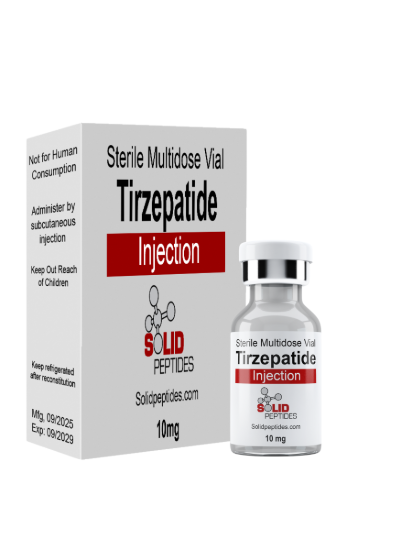

Evidence snapshot
SURMOUNT-1 demonstrated that adding GIP receptor agonism to GLP-1 signaling produces greater weight loss than GLP-1 alone, validating a new approach to peptide pharmacology.
GIP receptor adds a distinct metabolic pathway
Glucose-dependent insulinotropic polypeptide (GIP) regulates fat storage, insulin secretion, and energy balance through mechanisms partially independent of GLP-1. Dual activation appears to produce effects that are additive rather than redundant.
Weight loss surpassed single-target GLP-1 therapy
The 22.5% mean weight loss at the highest dose exceeded semaglutide’s 14.9% in STEP 1, though direct head-to-head trial data (SURMOUNT-5) was reported separately.
Body composition effects were meaningful
While total lean mass loss occurred proportionally to weight loss (as expected), improvements in visceral fat, liver fat markers, and metabolic parameters suggest the dual-agonist approach favorably shifts body composition beyond what scale weight alone captures.
Claim review
A useful way to read health content is to grade each major claim independently instead of accepting the whole narrative as a package.
“Tirzepatide is more effective than semaglutide for weight loss.”
Cross-trial comparisons suggested this, and the head-to-head SURMOUNT-5 trial confirmed it: tirzepatide 15 mg produced significantly greater weight loss than semaglutide 2.4 mg over 72 weeks.
“Dual agonism means double the side effects.”
The GI side effect profile (nausea, diarrhea, vomiting) is similar in character to GLP-1-only drugs. Rates were dose-dependent but not dramatically higher than semaglutide. Most events were transient and mild to moderate.
“Tirzepatide works through appetite suppression alone.”
While reduced caloric intake is the primary driver, the GIP component appears to contribute through additional mechanisms including improved insulin sensitivity, lipid handling, and potentially energy expenditure modulation.
Important considerations
- Tirzepatide (Zepbound/Mounjaro) is a prescription pharmaceutical studied under medical supervision. These results reflect controlled clinical conditions.
- Weight regain after discontinuation is expected based on GLP-1 class data. Obesity is a chronic condition requiring ongoing management.
- Individual response varied substantially across the trial population. Not all participants achieved the mean weight loss.
- Long-term cardiovascular outcomes data for tirzepatide in obesity (SURPASS-CVOT) is still pending.
Research questions worth tracking
- What specific contribution does GIP receptor activation make vs. GLP-1 receptor activation in weight management?
- Can tirzepatide demonstrate cardiovascular event reduction similar to semaglutide’s SELECT trial?
- How does long-term muscle mass preservation compare between dual and single agonist approaches?
- What role do genetic variants in GIP and GLP-1 receptor genes play in individual treatment response?
Primary sources
These references anchor the claims in this brief to peer-reviewed literature and authoritative guidance.
Research-use note
Nothing on this page should be used to diagnose, treat, or self-manage any medical condition. If a reader needs clinical guidance, the right next step is a licensed clinician and guideline-based care, not a research brief or a product listing.