Research Use Only: This product is supplied for laboratory research and in-vitro studies. Not for human or veterinary administration.
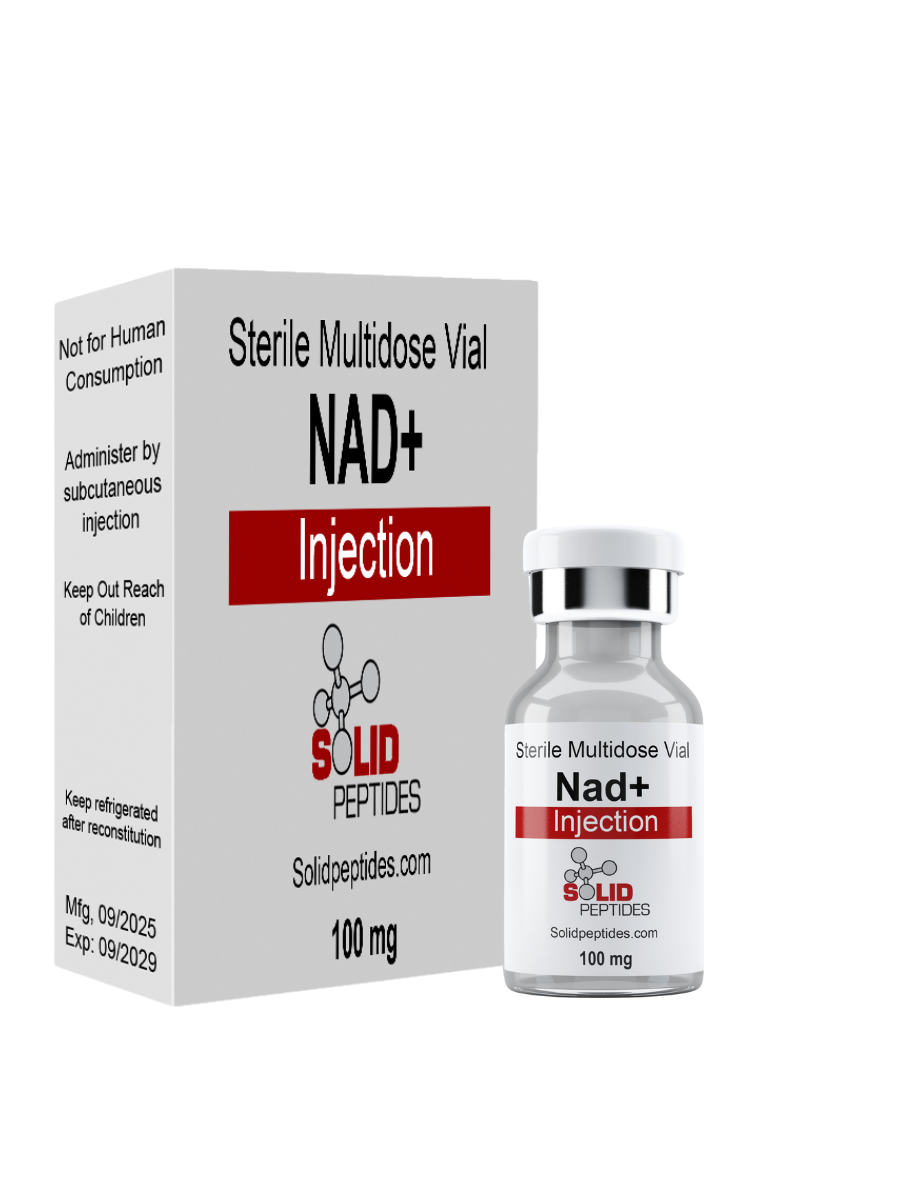
Hover to zoom
Identity Verified: LC-MS
(0 Reviews)
NAD+ (500 mg) 10 ml bottle
NAD+ (Nicotinamide Adenine Dinucleotide) is a fundamental redox coenzyme essential for cellular energy metabolism, DNA repair, and sirtuin-mediated aging pathways. Research shows NAD+ levels decline 10-65% with age, and supplementation may restore mitochondrial function and activate longevity pathways.
- Mechanistic pathway studies
- In vitro receptor profiling
- HPLC verified identity and purity
$95.00In Stock
Ships same-day if ordered before 2PM EST
1
Encrypted Checkout
Global Express
Research Overview
Nicotinamide adenine dinucleotide (NAD+) is a ubiquitous dinucleotide coenzyme functioning in over 500 enzymatic reactions across all living organisms. With >80,000 publications in PubMed, NAD+ research spans more than a century since its 1906 discovery. Beyond classical redox roles, NAD+ serves as essential cofactor for sirtuins (SIRT1-7), substrate for PARPs in DNA repair, and substrate for CD38 ectoenzyme. Research demonstrates NAD+ levels decline 10-65% with age depending on tissue, and this decline drives age-associated pathologies. CD38 activity increases 2-3 fold during aging and is the primary driver of NAD+ depletion. Studies show NAD+ restoration through precursor supplementation ameliorates age-associated functional defects, establishing NAD+ metabolism as a promising therapeutic target in aging biology.
Mechanism of Action
NAD+ functions through multiple mechanisms: (1) Redox Coenzyme - serves as electron carrier in glycolysis, citric acid cycle, and oxidative phosphorylation, with NAD+/NADH ratio indicating cellular metabolic state; (2) Sirtuin Cofactor - required substrate for SIRT1-7 deacetylases that regulate metabolism, DNA repair, stress response, and aging (SIRT1 activity directly responsive to NAD+/NADH ratio); (3) PARP Substrate - consumed by poly(ADP-ribose) polymerases during DNA damage repair, base excision repair, and chromatin remodeling (PARP1 accounts for ~90% of PARP activity and outcompetes SIRT1 for NAD+ during DNA damage); (4) CD38/CD157 Substrate - hydrolyzed by ectoenzymes to produce cyclic ADP-ribose (cADPR) calcium signaling messenger (CD38 activity increases 2-3 fold with aging, driving NAD+ decline); (5) Salvage Pathway - 85% of cellular NAD+ produced via NAMPT-mediated recycling of nicotinamide (NAM -> NMN -> NAD+), with NAMPT as rate-limiting enzyme regulated by circadian CLOCK:BMAL1 machinery.
“Mechanistic summaries on this page are provided for laboratory reference and should be interpreted within controlled experimental settings only.”
Preclinical Research Summary
Mouse studies demonstrate NAD+ levels decline progressively with age across multiple tissues, with CD38 knockout mice maintaining stable NAD+ levels throughout lifespan while wild-type mice show decline. CD38 enzymatic activity correlates inversely with NAD+ availability (r = -0.99). Mitochondrial ATP synthesis decreases 70% in aging wild-type mice but is preserved in CD38-deficient animals. SIRT3 activity increases 3.5-fold in CD38 knockout liver tissue. CD38 inhibitor 78c increased lifespan by 10% in naturally aged mice. NAD+ precursor supplementation (NMN, NR) restores NAD+ levels and ameliorates age-associated functional defects in multiple tissues. NAMPT levels decline with age, contributing to progressive NAD+ deficit. NAD+ oscillates in circadian manner regulated by CLOCK:BMAL1. PARP1 activation during DNA damage rapidly depletes NAD+ pools, creating metabolic tension with sirtuin functions. NAD+ concentrations are highest in mitochondria (40-70% of total cellular pool). Stability studies show >85% retention for 2 weeks at 4°C in dried blood spot matrices.
Academic References
1. Camacho-Pereira J, et al. (2016). CD38 Dictates Age-Related NAD Decline and Mitochondrial Dysfunction through an SIRT3-Dependent Mechanism. Cell Metab. 23(6):1127-1139. doi:10.1016/j.cmet.2016.05.006 [CD38 as primary driver of age-related NAD+ decline]
2. Imai S, Guarente L. (2014). NAD+ and sirtuins in aging and disease. Trends Cell Biol. 24(8):464-471. doi:10.1016/j.tcb.2014.04.002 [NAD+ decline and sirtuin regulation in aging]
3. Xie N, et al. (2020). NAD+ metabolism: pathophysiologic mechanisms and therapeutic potential. Signal Transduct Target Ther. 5:227. doi:10.1038/s41392-020-00311-7 [Comprehensive NAD+ metabolism review]
4. Chini CCS, et al. (2023). CD38 ecto-enzyme in immune cells is induced during aging and regulates NAD+ and NMN levels. Nat Metab. 5(1):167-182. doi:10.1038/s42255-022-00711-z [CD38 inhibitor extends lifespan 10%]
5. Covarrubias AJ, et al. (2021). NAD+ metabolism and its roles in cellular processes during ageing. Nat Rev Mol Cell Biol. 22(2):119-141. doi:10.1038/s41580-020-00313-x [PARP-sirtuin competition for NAD+]
6. Kane AE, Sinclair DA. (2018). Sirtuins and NAD+ in the Development and Treatment of Metabolic and Cardiovascular Diseases. Circ Res. 123(7):868-885. doi:10.1161/CIRCRESAHA.118.312498 [Sirtuin activity and NAD+/NADH ratio]
7. Rajman L, et al. (2018). Therapeutic Potential of NAD-Boosting Molecules: The In Vivo Evidence. Cell Metab. 27(3):529-547. doi:10.1016/j.cmet.2018.02.011 [NAD+ precursor supplementation efficacy]
8. Yoshino J, et al. (2018). NAD+ Intermediates: The Biology and Therapeutic Potential of NMN and NR. Cell Metab. 27(3):513-528. doi:10.1016/j.cmet.2017.11.002 [NMN and NR biosynthesis pathways]
9. Verdin E. (2015). NAD+ in aging, metabolism, and neurodegeneration. Science. 350(6265):1208-1213. doi:10.1126/science.aac4854 [NAD+ in neurodegenerative diseases]
10. Cantó C, et al. (2015). NAD+ Metabolism and the Control of Energy Homeostasis: A Balancing Act between Mitochondria and the Nucleus. Cell Metab. 22(1):31-53. doi:10.1016/j.cmet.2015.05.023 [NAD+ compartmentalization and energy metabolism]
This product is intended exclusively for in vitro laboratory research by qualified professionals. Not for human consumption. Not approved by the FDA.
Published Research Briefs
Our research team has published evidence-checked briefs covering the science behind this compound. Each brief reviews primary sources and grades claims independently.