Why NAD+ Declines With Age and What the Science Says About NMN
An evidence-checked research brief reviewing the Cell Metabolism review on NAD+ intermediates, the biology of age-related NAD+ decline, and the therapeutic potential of NMN and NR supplementation.
RiboCore products are supplied strictly for laboratory and in-vitro research. This page is educational and should not be read as medical advice, a diagnosis, or a recommendation for human use.
What the review covers
This summary captures the review’s scope and main conclusions. It is not an endorsement of any therapeutic application.
- NAD+ levels decline with age across multiple tissues including liver, muscle, brain, and adipose tissue. This decline is associated with impaired mitochondrial function, DNA repair, and sirtuin activity.
- NMN (nicotinamide mononucleotide) and NR (nicotinamide riboside) are biosynthetic precursors that can raise tissue NAD+ levels when administered orally in preclinical models.
- Preclinical NMN supplementation improved insulin sensitivity, restored endothelial function, enhanced mitochondrial activity, and reversed age-related gene expression changes in mice.
- The review identifies the CD38 enzyme as a major driver of age-related NAD+ decline, with CD38 expression increasing with chronic inflammation during aging.
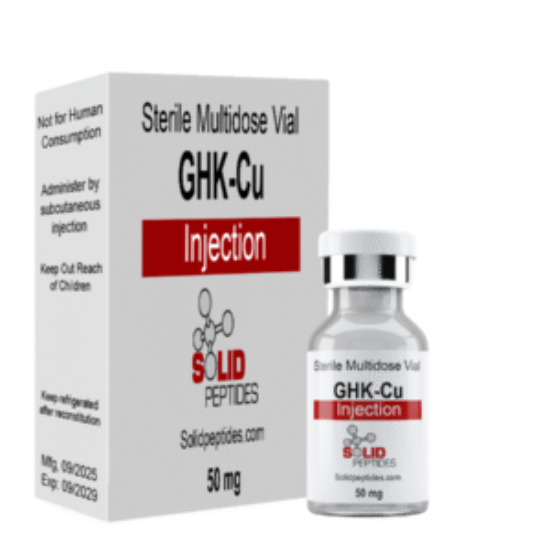
Related Research Compounds
These compounds are discussed in the research above and are available in our catalog for qualified researchers.
Evidence snapshot
NAD+ biology represents one of the most actively researched areas in longevity science, with a strong mechanistic foundation and growing translational data.
NAD+ decline is a hallmark of aging
Multiple independent groups have confirmed that tissue NAD+ levels fall 40–60% between young adulthood and old age in mammals. This decline correlates with reduced mitochondrial function, impaired DNA repair, and decreased sirtuin activity — all of which are implicated in aging.
Preclinical restoration improves healthspan
NMN supplementation in aged mice restored tissue NAD+ levels and improved multiple aging-associated phenotypes: insulin sensitivity, vascular function, physical endurance, and neuronal resilience. These results are reproducible across multiple laboratories.
First human NMN trial showed metabolic benefit
A 2021 clinical trial by the same group (Yoshino et al., Science) showed that 10 weeks of NMN supplementation improved muscle insulin sensitivity in prediabetic postmenopausal women — the first human evidence that NMN has tissue-specific metabolic effects.
Claim review
A useful way to read health content is to grade each major claim independently instead of accepting the whole narrative as a package.
“NAD+ supplementation reverses aging.”
NAD+ restoration improves specific age-related impairments in preclinical models and has shown one positive human metabolic endpoint. But “reversing aging” is a much broader claim that no intervention has demonstrated comprehensively.
“NAD+ declines with age.”
This is among the most reproducible findings in aging biology, confirmed across species, tissues, and laboratories. The mechanism (increased CD38 activity plus decreased biosynthesis) is well-characterized.
“Oral NMN raises tissue NAD+ levels.”
Multiple preclinical studies and emerging human pharmacokinetic data confirm that oral NMN increases circulating and tissue NAD+ levels. The magnitude, tissue specificity, and dose-response in humans are still being characterized.
Important considerations
- Most NAD+ restoration data comes from mouse models. Mice and humans differ in NAD+ metabolism, lifespan dynamics, and disease biology.
- The first human NMN trial was small (25 women) and short (10 weeks). Large, long-duration randomized trials are needed.
- NAD+ biology is complex: simply raising levels may not recapitulate the benefits seen in genetic or caloric restriction models.
- Commercial NMN and NR products vary widely in purity, stability, and bioavailability. Quality control is a genuine concern.
Research questions worth tracking
- What is the optimal dose and duration of NMN supplementation needed to sustain tissue NAD+ elevation in humans?
- Does NAD+ restoration improve clinical endpoints beyond insulin sensitivity (e.g., cardiovascular, neurological, musculoskeletal)?
- How does CD38 inhibition compare to precursor supplementation as a strategy for raising NAD+ levels?
- Are there long-term safety concerns with chronically elevated NAD+ levels, particularly regarding cellular proliferation pathways?
Primary sources
These references anchor the claims in this brief to peer-reviewed literature and authoritative guidance.
Research-use note
Nothing on this page should be used to diagnose, treat, or self-manage any medical condition. If a reader needs clinical guidance, the right next step is a licensed clinician and guideline-based care, not a research brief or a product listing.