Research Use Only: This product is supplied for laboratory research and in-vitro studies. Not for human or veterinary administration.
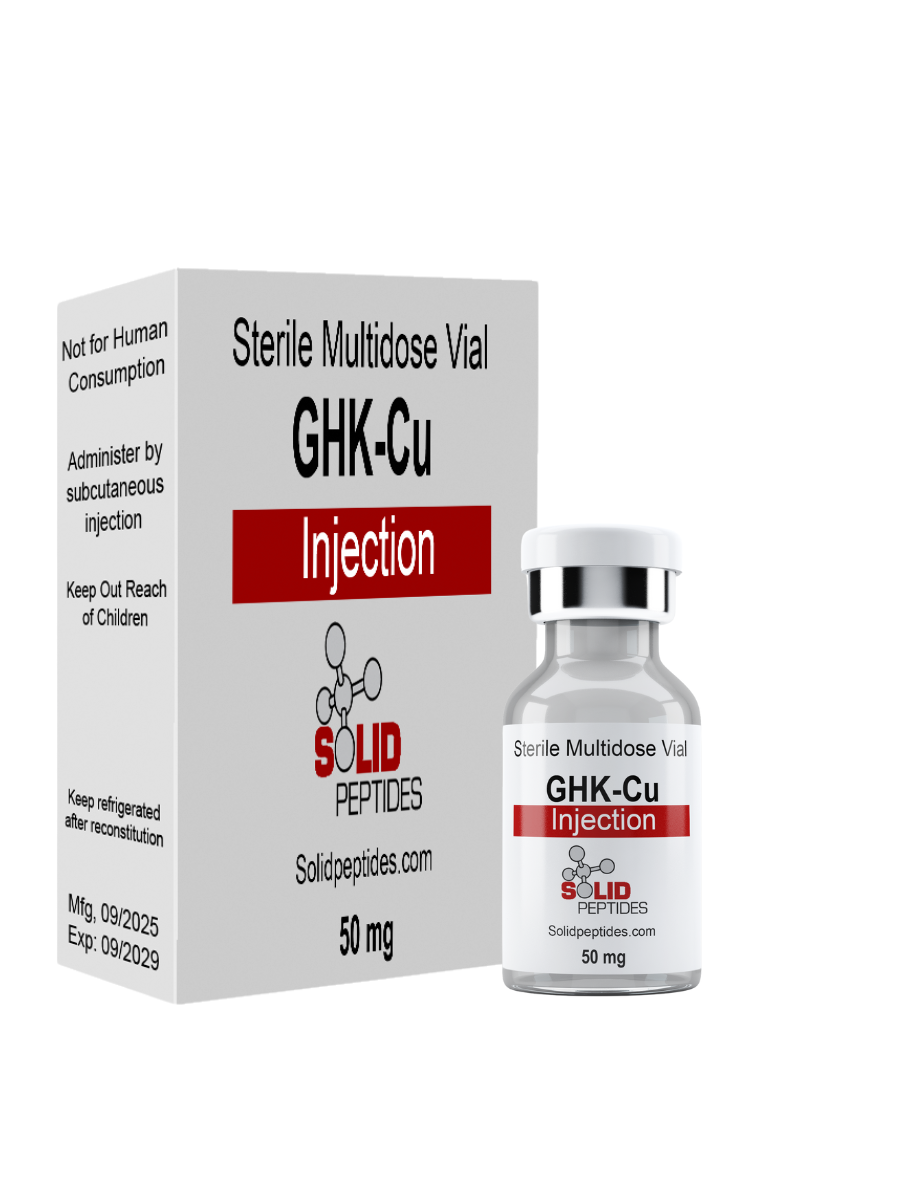
GHK-Cu 50mg Copper Peptide
GHK-Cuis a research peptide composed of the tripeptide sequence Gly-His-Lys bound to copper(II) ions, forming a biologically active peptide–metal complex studied for its role in extracellular matrix modulation and cellular signaling. Preclinical research indicates that GHK-Cu regulates collagen production, gene expression, and enzymatic antioxidant pathways through copper-mediated redox mechanisms. It serves as a model compound for investigating peptide-driven tissue remodeling, metalloprotein r
- Mechanistic pathway studies
- In vitro receptor profiling
- HPLC verified identity and purity
Ships same-day if ordered before 2PM EST
Research Overview
GHK-Cu (glycyl-L-histidyl-L-lysine copper complex) is a naturally occurring tripeptide–metal complex identified in biological fluids and extracellular matrices. The peptide exhibits high affinity for divalent copper ions and has been extensively studied in laboratory research for its role in cellular signaling, tissue remodeling, and copper homeostasis.
Scientific investigation of GHK-Cu focuses on its biochemical interactions with fibroblasts, endothelial cells, immune cells, and neuronal tissue models. All discussion herein is limited strictly to in-vitro and in-vivo animal research contexts and does not imply clinical, cosmetic, or therapeutic use.
Peptide Sequence: Gly-His-Lys (Cu²⁺)
Mechanism of Action
Mechanistic studies indicate that GHK-Cu modulates multiple biochemical pathways, including integrin signaling, transforming growth factor-β (TGF-β) regulation, suppression of pro-inflammatory cytokines, and activation of antioxidant response elements.
Gene-expression analyses further demonstrate that GHK-Cu can influence transcriptional networks associated with cellular migration, extracellular matrix turnover, neuronal survival, and redox balance. Copper sequestration by the peptide appears to limit metal-catalyzed oxidative stress, thereby affecting downstream signaling cascades.
“Mechanistic summaries on this page are provided for laboratory reference and should be interpreted within controlled experimental settings only.”
Preclinical Research Summary
Preclinical investigations of GHK-Cu include in-vitro fibroblast and keratinocyte models, neuronal regeneration assays, antimicrobial interaction studies, and multiple in-vivo animal models of tissue injury and inflammation.
Experimental observations report enhanced cellular migration, increased extracellular matrix deposition, modulation of inflammatory mediators, and altered gene-expression patterns associated with regeneration and stress response. These findings are presented solely as laboratory observations without implication of clinical, cosmetic, or therapeutic outcomes.
This product is intended exclusively for in vitro laboratory research by qualified professionals. Not for human consumption. Not approved by the FDA.
Published Research Briefs
Our research team has published evidence-checked briefs covering the science behind this compound. Each brief reviews primary sources and grades claims independently.