GHK-Cu: How a Naturally Occurring Peptide Resets Gene Expression for Tissue Repair
An evidence-checked research brief reviewing the 2018 IJMS paper on GHK-Cu’s regenerative and protective actions, including gene expression data showing modulation of over 4,000 human genes.
RiboCore products are supplied strictly for laboratory and in-vitro research. This page is educational and should not be read as medical advice, a diagnosis, or a recommendation for human use.
What the paper reports
These findings summarize the authors’ conclusions. Independent replication status is noted in the claim review below.
- GHK (glycyl-L-histidyl-L-lysine) is a naturally occurring tripeptide found in human plasma, saliva, and urine. When bound to copper (GHK-Cu), it functions as a signaling molecule that modulates tissue repair, inflammation, and gene expression.
- Broad Institute Connectivity Map data revealed that GHK modulates expression of more than 4,000 human genes — approximately 31.2% of the human genome — resetting many age-elevated or age-suppressed genes toward younger expression patterns.
- Circulating GHK levels decline with age: from roughly 200 ng/mL at age 20 to 80 ng/mL by age 60, correlating with reduced tissue regenerative capacity.
- GHK-Cu stimulates collagen and elastin synthesis, attracts immune cells to wound sites, promotes angiogenesis, and has demonstrated anti-anxiety effects in animal models.
Related Research Compounds
These compounds are discussed in the research above and are available in our catalog for qualified researchers.
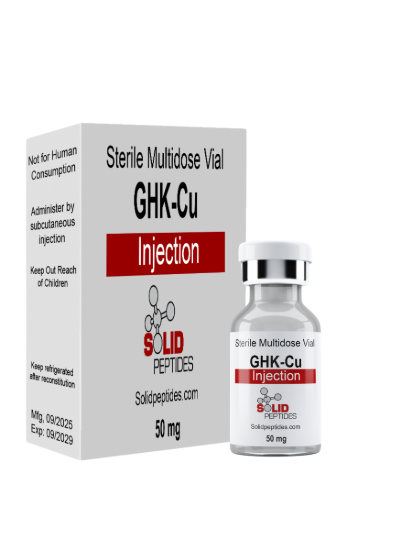
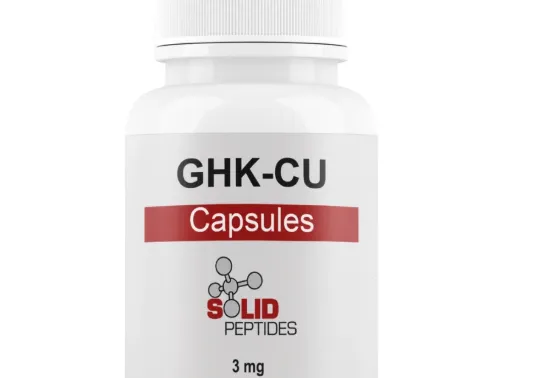
Evidence snapshot
GHK-Cu is unusual among peptides for having both decades of traditional wound-healing data and modern genomic validation of its broad biological activity.
Gene expression scope is unusually broad
The Connectivity Map analysis showed GHK influences genes involved in DNA repair, antioxidant defense, ubiquitin/proteasome activity, growth factor signaling, collagen synthesis, and anti-inflammatory pathways. This breadth suggests GHK acts as a systemic repair signal.
Wound healing data spans four decades
GHK-Cu was first characterized in the 1970s by Loren Pickart. Studies have documented accelerated wound closure, increased collagen deposition, enhanced angiogenesis, and improved tensile strength in healing tissue.
Age-related decline parallels regenerative capacity
The 60% decline in circulating GHK between ages 20 and 60 mirrors the well-documented decline in wound healing speed and tissue regenerative capacity during aging, suggesting a functional relationship.
Claim review
A useful way to read health content is to grade each major claim independently instead of accepting the whole narrative as a package.
“GHK-Cu reverses gene expression aging.”
The Connectivity Map data shows that GHK shifts age-dysregulated genes toward younger expression patterns. However, this is computational genomics data — whether these changes translate to physiological rejuvenation in humans requires clinical validation.
“GHK-Cu is the most effective anti-aging peptide.”
GHK-Cu has impressive breadth of gene modulation data, but comparative claims require head-to-head studies that have not been conducted. The evidence is strongest for wound healing and collagen stimulation.
“Topical GHK-Cu improves skin quality.”
Multiple studies confirm that topical GHK-Cu stimulates collagen synthesis, increases skin thickness, and improves wound healing. It is widely used as a cosmetic ingredient with reasonable supporting evidence.
Important considerations
- The gene expression findings come from Connectivity Map computational analysis, not from direct measurement of gene changes in human subjects after GHK administration.
- Much of the primary GHK-Cu research comes from its original discoverer, Loren Pickart. Broader independent validation would strengthen the evidence base.
- Topical skin benefits are the best-validated clinical application. Systemic effects of injectable GHK-Cu in humans are less well characterized.
- Copper biology is dose-sensitive. While GHK-Cu delivers copper in a physiological context, copper toxicity is a real concern at high doses.
Research questions worth tracking
- Can the Connectivity Map gene expression predictions be confirmed with direct measurement in human subjects receiving GHK-Cu?
- What is the optimal route and dose of GHK-Cu for systemic vs. local tissue repair effects?
- Does GHK-Cu’s gene modulation profile differ between young and aged subjects?
- How does the copper component contribute to efficacy vs. the GHK peptide backbone alone?
Primary sources
These references anchor the claims in this brief to peer-reviewed literature and authoritative guidance.
Research-use note
Nothing on this page should be used to diagnose, treat, or self-manage any medical condition. If a reader needs clinical guidance, the right next step is a licensed clinician and guideline-based care, not a research brief or a product listing.