Thymosin Alpha-1: The Immune-Modulating Peptide Approved in 35+ Countries
An evidence-checked research brief reviewing the clinical and immunological evidence for thymosin alpha-1, a peptide with regulatory approval in over 35 countries for hepatitis B, cancer adjuvant use, and immune deficiency.
RiboCore products are supplied strictly for laboratory and in-vitro research. This page is educational and should not be read as medical advice, a diagnosis, or a recommendation for human use.
What the review covers
This summary captures the review’s scope and main conclusions. It is not an endorsement of any therapeutic application.
- Thymosin alpha-1 (Tα1) is a 28-amino-acid peptide originally isolated from thymic tissue. It modulates the immune system by promoting dendritic cell maturation and shifting T-helper cell balance toward Th1 responses.
- Tα1 (marketed as Zadaxin) is approved in over 35 countries for chronic hepatitis B, as a vaccine adjuvant in immunocompromised patients, and as an adjunct in certain cancer immunotherapy regimens.
- Clinical trials demonstrated improved viral clearance rates in hepatitis B and C, enhanced immune reconstitution in immunodeficient patients, and improved survival when combined with chemotherapy in hepatocellular carcinoma.
- The mechanism involves toll-like receptor (TLR) signaling, specifically TLR9 and TLR2, which link innate and adaptive immune activation.
Related Research Compounds
These compounds are discussed in the research above and are available in our catalog for qualified researchers.
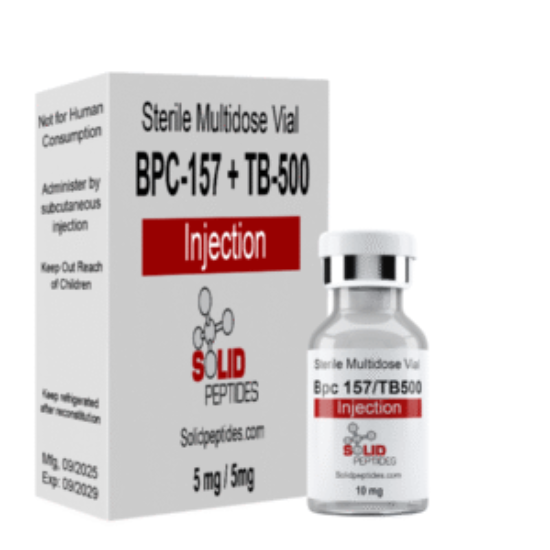
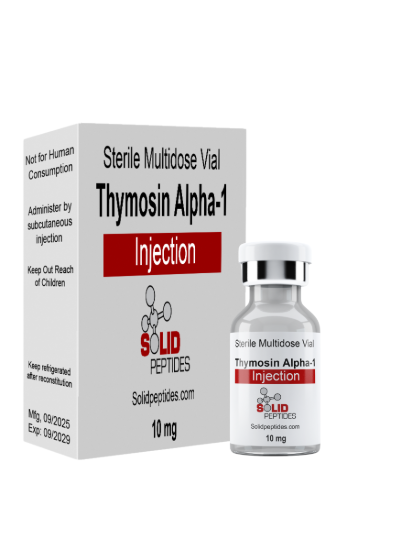
Evidence snapshot
Thymosin alpha-1 has the broadest regulatory approval of any immunomodulatory peptide, with clinical data spanning hepatitis, cancer, and immune deficiency over three decades.
Dendritic cell maturation is the core mechanism
Tα1 promotes the maturation and function of dendritic cells — the immune system’s antigen-presenting sentinels. By enhancing dendritic cell cross-presentation, Tα1 improves the immune system’s ability to recognize and respond to both viral and tumor-associated antigens.
Th1/Th2 balance shifts toward cell-mediated immunity
Tα1 promotes a Th1-dominant immune profile (interferon-gamma, IL-2) while attenuating excessive Th2 responses. This shift is therapeutically relevant because chronic viral infections and many cancers exploit Th2-dominant immune environments.
Regulatory approval provides clinical validation
Unlike many experimental peptides, Tα1 has completed multiple randomized controlled trials sufficient for regulatory approval in over 35 countries. This provides a clinical evidence base that extends beyond preclinical speculation.
Claim review
A useful way to read health content is to grade each major claim independently instead of accepting the whole narrative as a package.
“Thymosin alpha-1 boosts the immune system.”
Tα1 modulates and enhances specific immune functions, particularly dendritic cell maturation and Th1 responses. “Boosts” is imprecise but directionally correct for immunocompromised patients.
“Thymosin alpha-1 can cure hepatitis B.”
Tα1 improved viral clearance rates in hepatitis B trials, but treatment typically requires combination therapy. Tα1 is an adjunct, not a standalone cure.
“If it’s approved in 35 countries, it must work.”
Regulatory approval in multiple countries indicates clinical data met specific thresholds. However, standards vary internationally, and Tα1 has not received FDA or EMA approval, which require different evidentiary standards.
Important considerations
- Tα1 is not FDA or EMA approved. Its approvals are primarily in Asian and some European countries with different clinical trial requirements.
- Immune modulation is bidirectional — enhancing immune function is not always beneficial. In autoimmune conditions, immune stimulation could be harmful.
- Clinical data is strongest for hepatitis B in combination with standard antiviral therapy. Standalone use for other conditions has weaker evidence.
- Tα1 research for COVID-19 generated considerable interest, but results were mixed.
Research questions worth tracking
- Would Tα1 meet current FDA/EMA standards if submitted under modern trial design requirements?
- Can Tα1 enhance response rates to checkpoint immunotherapy (anti-PD-1/PD-L1) in solid tumors?
- What is the optimal role of Tα1 in vaccine adjuvant strategies for immunocompromised populations?
- How does Tα1’s immune modulation interact with age-related immune senescence?
Primary sources
These references anchor the claims in this brief to peer-reviewed literature and authoritative guidance.
Research-use note
Nothing on this page should be used to diagnose, treat, or self-manage any medical condition. If a reader needs clinical guidance, the right next step is a licensed clinician and guideline-based care, not a research brief or a product listing.