Tesamorelin: The Only FDA-Approved Growth Hormone Secretagogue
An evidence-checked research brief reviewing the NEJM pivotal trial for tesamorelin, the only growth hormone-releasing factor to complete a full FDA regulatory pathway, approved for HIV-associated lipodystrophy.
RiboCore products are supplied strictly for laboratory and in-vitro research. This page is educational and should not be read as medical advice, a diagnosis, or a recommendation for human use.
What the trial found
These are the primary findings as reported by the investigators. This is a summary, not an endorsement of off-label use.
- Tesamorelin reduced trunk fat by 15.2% and visceral adipose tissue significantly compared to placebo over 26 weeks in HIV patients with lipodystrophy.
- Unlike exogenous growth hormone, tesamorelin stimulates the pituitary to produce GH physiologically, preserving the body’s natural feedback mechanisms.
- Improvements in lipid profiles (triglycerides, cholesterol ratios) accompanied the fat reduction.
- Tesamorelin received FDA approval in 2010 as Egrifta, making it the only growth hormone-releasing factor approved for clinical use in the United States.
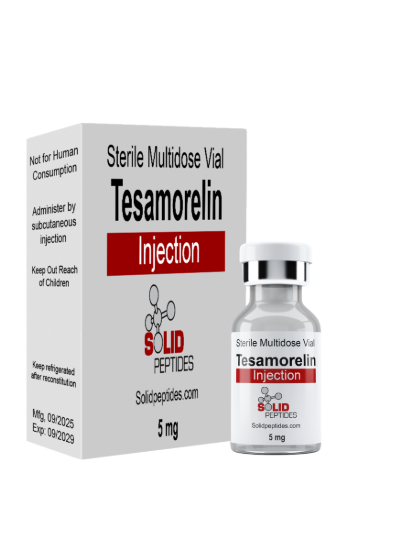
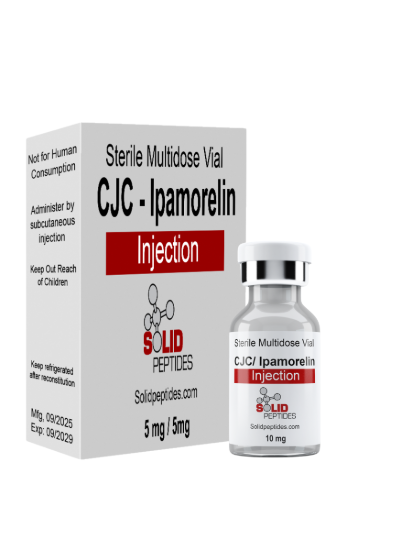
Related Research Compounds
These compounds are discussed in the research above and are available in our catalog for qualified researchers.
Evidence snapshot
Tesamorelin’s FDA approval provides the strongest regulatory validation for the growth hormone secretagogue class, demonstrating that peptide-mediated GH release can achieve clinically meaningful outcomes.
GHRH analog preserves physiological GH pulsatility
Unlike direct GH injection (which bypasses the hypothalamic-pituitary axis), tesamorelin stimulates the pituitary gland to release growth hormone in a physiological pulsatile pattern. This preserves negative feedback and reduces risk of supraphysiological levels.
Visceral fat reduction was selective
Tesamorelin preferentially reduced visceral (organ-surrounding) fat rather than subcutaneous fat. Visceral adipose tissue is metabolically more active and more strongly associated with cardiovascular and metabolic disease risk.
Lipid improvements accompanied fat reduction
Triglyceride levels decreased and cholesterol ratios improved, suggesting the visceral fat reduction translates to meaningful metabolic improvement beyond body composition changes.
Claim review
A useful way to read health content is to grade each major claim independently instead of accepting the whole narrative as a package.
“Growth hormone secretagogues are safer than GH injections.”
Secretagogues that work through the GHRH axis preserve physiological pulsatility and negative feedback, theoretically reducing risk of supraphysiological GH exposure. Tesamorelin’s safety profile supports this.
“Tesamorelin is an anti-aging drug.”
Tesamorelin is approved for a specific clinical indication (HIV lipodystrophy). While GH decline contributes to age-related body composition changes, tesamorelin has not been studied or approved for anti-aging purposes.
“All GH secretagogues work the same way.”
GH secretagogues act through different receptors: GHRH analogs (tesamorelin, CJC-1295) stimulate the GHRH receptor, while ghrelin mimetics (ipamorelin, MK-677) stimulate the GHS receptor. These have overlapping but distinct profiles.
Important considerations
- Tesamorelin is approved specifically for HIV-associated lipodystrophy. Off-label use for body composition in non-HIV populations lacks the same level of evidence.
- Growth hormone elevation carries theoretical risks including insulin resistance, fluid retention, and joint pain.
- The distinction between GHRH receptor agonists and ghrelin receptor agonists matters pharmacologically and should not be conflated.
- FDA approval of tesamorelin does not constitute endorsement of other GH secretagogue peptides that have not completed regulatory review.
Research questions worth tracking
- Can tesamorelin or similar GHRH analogs benefit age-related sarcopenia and visceral adiposity in non-HIV populations?
- How does the GH response to tesamorelin change with aging, given age-related pituitary decline?
- What is the long-term metabolic safety profile of sustained GHRH analog treatment beyond the approved indication?
- How do combined GHRH/ghrelin receptor approaches (e.g., CJC-1295 + ipamorelin) compare to single-receptor strategies?
Primary sources
These references anchor the claims in this brief to peer-reviewed literature and authoritative guidance.
Research-use note
Nothing on this page should be used to diagnose, treat, or self-manage any medical condition. If a reader needs clinical guidance, the right next step is a licensed clinician and guideline-based care, not a research brief or a product listing.