HSV Latency, Reactivation, and Protocol Claims
An evidence-checked research brief reviewing a podcast discussion of HSV latency, antivirals, nutrient depletion, and peptide-based outbreak claims.
RiboCore products are supplied strictly for laboratory and in-vitro research. This page is educational and should not be read as medical advice, a diagnosis, or a recommendation for human use.
What the podcast argues
This summary describes the host’s framing and recommendations. It is not an endorsement.
- The host argues that herpes should be understood primarily as a neurological latency problem rather than a simple skin condition.
- He says there is no true cure for HSV, but claims outbreaks can be sustainably suppressed by improving stress control, sleep, diet, micronutrient status, and immune surveillance.
- He presents a single-patient case study, criticizes chronic antiviral management as incomplete, and promotes a stack that includes lysine, monolaurin, and several peptides.
- He frames the strategy as building an internal “border” that prevents viral reactivation from reaching the skin, rather than eliminating latent virus from neurons.
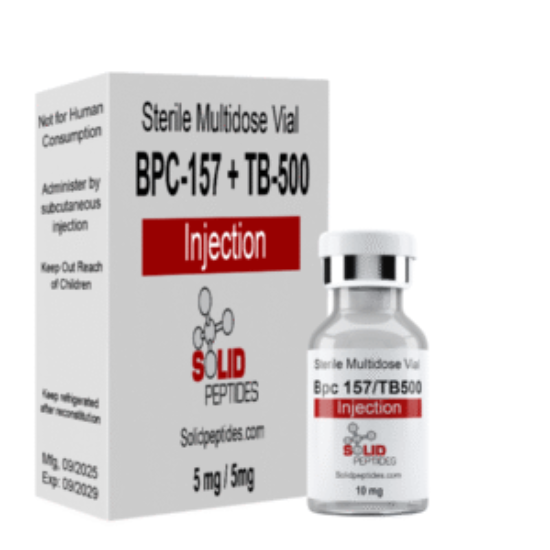
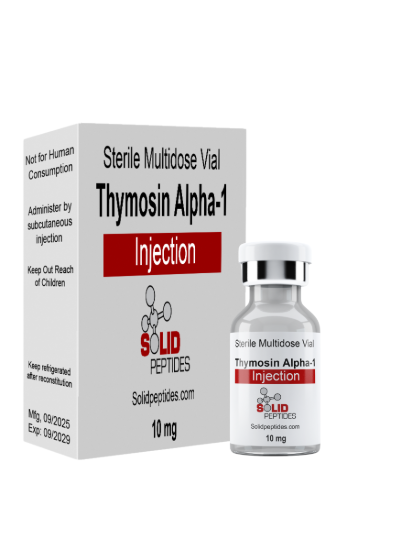
Related Research Compounds
These compounds are discussed in the research above and are available in our catalog for qualified researchers.
Evidence snapshot
The strongest takeaways from the episode are about HSV biology itself, not the sales-driven protocol layered on top of it.
HSV latency is neural
After primary infection, herpes simplex virus establishes lifelong latency in sensory neurons. Oral HSV is commonly linked to trigeminal ganglia, while genital HSV is commonly linked to sacral or dorsal root ganglia.
Current treatment controls outbreaks, not latency
Acyclovir, valacyclovir, and famciclovir can reduce symptoms, recurrence frequency, and HSV-2 transmission risk, but they do not eradicate latent virus from neurons.
Immune surveillance matters
HSV reactivation is shaped by local immune control. CD8+ T cells and interferon signaling help restrain attempted reactivation without necessarily destroying neurons.
Claim review
A useful way to read health content is to grade each major claim independently instead of accepting the whole narrative as a package.
“Herpes is not just a skin problem.”
This framing is directionally correct. Visible lesions occur at the skin or mucosa, but latency is maintained in sensory ganglia and reactivation is a neurovirologic process.
“There is no cure for herpes right now.”
That matches current clinical reality. Available antiviral therapy can suppress disease activity, but no approved treatment removes latent HSV from the nervous system.
“Long-term acyclovir causes kidney damage and neurotoxicity.”
Renal dosing and adverse effects matter in higher-risk settings, but CDC guidance describes long-term suppressive therapy as documented for safety and efficacy, with adverse events and resistance uncommon.
“A peptide and supplement protocol can stop outbreaks forever.”
Single-patient anecdotes can generate hypotheses, but they are not proof. Robust randomized human HSV data were not identified for the peptide stack discussed.
Important considerations
- The podcast mixes established HSV biology with large treatment claims that go beyond currently validated clinical evidence.
- Daily suppressive antivirals remain the evidence-based standard for recurrent HSV management and transmission reduction.
- L-lysine has been studied in older, relatively small trials, but it is not part of CDC guideline therapy.
- Experimental peptides such as thymosin alpha 1, LL-37, BPC-157, and KPV are not established HSV therapies in human treatment guidelines.
Research questions worth tracking
- Which host immune signals best predict the transition from latency to symptomatic reactivation?
- Can future immune-modulating or gene-targeted approaches reduce reactivation without harming sensory neurons?
- Which biomarkers meaningfully track outbreak risk beyond symptom diaries alone?
- Do any experimental peptide candidates demonstrate reproducible benefit in controlled human HSV trials?
Primary sources
These references anchor the claims in this brief to peer-reviewed literature and authoritative guidance.
Research-use note
Nothing on this page should be used to diagnose, treat, or self-manage any medical condition. If a reader needs clinical guidance, the right next step is a licensed clinician and guideline-based care, not a research brief or a product listing.