Research Use Only: This product is supplied for laboratory research and in-vitro studies. Not for human or veterinary administration.
Hover to zoom
Identity Verified: LC-MS
(0 Reviews)
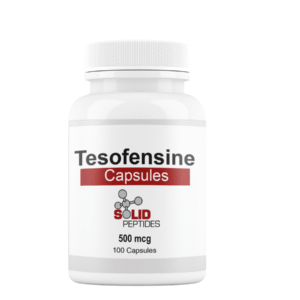
Tesofensine Capsules (500mcg) 100 Count
- Triple monoamine reuptake inhibitor (TRI) potently inhibiting presynaptic reuptake of serotonin, norepinephrine, and dopamine with IC₅₀ values: NET 1.7-3.2 nM, SERT 11 nM, DAT 8.0-65 nM
- Produces approximately twice the weight loss of currently marketed anti-obesity medications; Phase II trials: 9-11% body weight reduction over 24 weeks at therapeutic doses (0.5-1.0 mg)
- FDA orphan drug designation for Tesomet (tesofensine + metoprolol) in Prader-Willi syndrome (March 2021) and hypothalamic obesity (July 2021); exceptionally long half-life (~9 days) enabling once-daily dosing
- Mechanistic pathway studies
- In vitro receptor profiling
- HPLC verified identity and purity
$170.00In Stock
Ships same-day if ordered before 2PM EST
1
Encrypted Checkout
Global Express
Research Overview
Tesofensine has been extensively validated across multiple clinical and preclinical research domains:
- Triple Monoamine Reuptake Inhibition: Potent non-selective inhibitor of all three monoamine transporters with in vitro binding affinities: NET (norepinephrine transporter) 1.7-3.2 nM (highest affinity), SERT (serotonin transporter) 11 nM (intermediate), DAT (dopamine transporter) 8.0-65 nM (lowest among the three). PET imaging studies in humans demonstrate dose-dependent dopamine transporter occupancy ranging from 18% to 77% at therapeutic doses, with maximum achievable DAT occupancy approximately 80%
- Appetite Suppression via α1 Adrenoceptor and D1 Receptor Pathways: Axel et al. (2010, Neuropsychopharmacology) demonstrated tesofensine induces appetite suppression through indirect stimulation of α1 adrenoceptors (dominant mechanism) in hypothalamic paraventricular nucleus (PVN) and D1 receptors (secondary mechanism). Prazosin (α1 antagonist) almost completely abolished tesofensine-induced food intake suppression. Increased latency to first meal by 571% and reduced meal frequency and size
- GABAergic Hypothalamic Neuron Silencing: Hjorth et al. (2024, PLOS ONE) revealed tesofensine selectively inhibits lateral hypothalamus (LH) GABAergic neurons that promote feeding behavior, even during optogenetic stimulation. Diet-induced obese rats show greater weight loss than lean rats, correlating with differential modulation of LH neuronal ensembles. Chemogenetic silencing of LH GABAergic neurons combined with tesofensine produces additive effects on reducing food-seeking behavior
- Clinical Efficacy in Obesity: Astrup et al. (2008, Lancet) pivotal Phase II trial: 203 obese patients (BMI 30-40 kg/m²) over 24 weeks with energy-restricted diet. Dose-dependent weight loss: 4.5% (0.25 mg), 9.2% (0.5 mg), 10.6% (1.0 mg) vs 2.0% placebo. Tesofensine 0.5 mg demonstrated potential to produce twice the weight loss of currently approved anti-obesity drugs. Common adverse events: dry mouth, nausea, constipation, insomnia; heart rate increased by 7.4 bpm at 0.5 mg dose
- Energy Metabolism and Thermogenesis: Hansen et al. (2010, IJO) randomized controlled trial in 32 overweight/obese men: tesofensine produced 1.8 kg weight loss vs placebo over 2 weeks without dietary intervention. Increased 24-hour fat oxidation by 18 g (P<0.001) and nighttime energy expenditure by 4.6% (P<0.05) when adjusted for body composition. Higher satiety and fullness ratings with lower prospective food intake
- Hypothalamic Obesity Treatment: Hauber et al. (2022, Obesity) Phase 2 trial: Tesomet (tesofensine 0.5 mg + metoprolol 50 mg) in 21 adults with hypothalamic obesity. Mean weight loss: 6.6% (Tesomet) vs 0.3% (placebo) over 24 weeks; 61.5% achieved >=5% weight loss. Weight loss did not plateau at any timepoint, suggesting sustained efficacy. No significant differences in heart rate or blood pressure between groups (metoprolol mitigated cardiovascular effects)
- Neuroplasticity and BDNF Expression: Larsen et al. (2007, EJP) chronic administration (14 days, but not 5 days) increased brain-derived neurotrophic factor (BDNF) mRNA expression by 35% in CA3 hippocampal region and activity-regulated cytoskeleton-associated protein (Arc) mRNA by 65% in CA1 region. Enhanced adult hippocampal neurogenesis: increased Ki-67 and NeuroD-positive cell proliferation in dentate gyrus, suggesting antidepressant potential
- Abuse Potential Assessment: Schoedel et al. (2010, Clinical Pharmacology & Therapeutics) randomized, double-blind crossover study in 52 recreational stimulant users: tesofensine effects not significantly different from placebo and markedly lower than D-amphetamine. Abuse potential no greater than bupropion or atomoxetine (non-scheduled drugs). Concluded tesofensine unlikely to be recreationally abused despite dopaminergic activity
Pharmacokinetics: Elimination half-life approximately 234 hours (~9.75 days); hepatic metabolism primarily via CYP3A4 to form active N-desalkyl metabolite M1 (NS2360) with even longer half-life of 374 hours (~15.6 days); high oral bioavailability; large volume of distribution (~600 L); low oral clearance (30-40 mL/min); M1 contributes approximately 6% of overall pharmacological activity.
Primary Research Applications
Monoamine transporter pharmacology (comparative studies of balanced vs selective monoamine reuptake inhibitors, PET imaging of dopamine transporter occupancy)
Appetite regulation and feeding behavior research (α1 adrenoceptor and D1 receptor pathway contributions to satiety, lateral hypothalamus GABAergic neuron function)
Energy metabolism and thermogenesis studies (resting and nighttime energy expenditure measurement, fat oxidation and substrate utilization shift analysis)
Obesity pathophysiology and pharmacotherapy (preclinical and clinical obesity treatment models, combination therapy approaches with metoprolol)
Neuropharmacology and neuroplasticity (BDNF and Arc gene expression regulation in hippocampus, adult hippocampal neurogenesis)
Striatal dopamine reward circuitry (D2/D3 receptor availability and compensatory downregulation, food reward processing and motivation circuits)
Pharmacokinetics and drug metabolism (ultra-long half-life drug disposition modeling, CYP3A4-mediated metabolism and active metabolite formation)
Mechanism of Action
Tesofensine functions through potent triple monoamine reuptake inhibition, increasing synaptic concentrations of norepinephrine, serotonin, and dopamine.
1. Triple Monoamine Reuptake Inhibition:
Tesofensine is a potent non-selective inhibitor of all three monoamine transporters with in vitro binding affinities (IC₅₀ values): NET (norepinephrine transporter) 1.7-3.2 nM (highest affinity), SERT (serotonin transporter) 11 nM (intermediate affinity), DAT (dopamine transporter) 8.0-65 nM (lowest affinity among the three). This balanced triple reuptake inhibition increases synaptic concentrations of norepinephrine, serotonin, and dopamine in brain regions involved in appetite regulation, energy homeostasis, and reward processing. PET imaging studies in humans demonstrate dose-dependent dopamine transporter occupancy ranging from 18% to 77% at therapeutic doses, with maximum achievable DAT occupancy estimated at approximately 80%.
2. Appetite Suppression via α1 Adrenoceptor and D1 Receptor Pathways:
Preclinical studies (Axel et al., 2010) demonstrate that tesofensine induces appetite suppression through indirect stimulation of two primary receptor systems in the hypothalamus: α1 Adrenoceptor Pathway (Dominant Mechanism) — tesofensine blocks norepinephrine reuptake, increasing synaptic norepinephrine availability; accumulated norepinephrine indirectly stimulates α1 adrenoceptors, particularly in the paraventricular nucleus (PVN) of the hypothalamus; pharmacological blockade with the α1 antagonist prazosin almost completely abolishes tesofensine-induced food intake suppression; this pathway is primarily responsible for reducing meal frequency, meal size, and meal duration. Dopamine D1 Receptor Pathway (Secondary Mechanism) — tesofensine inhibits dopamine reuptake, allowing dopamine accumulation at synaptic sites; enhanced dopamine signaling activates D1 receptors in hypothalamic feeding centers; D1 receptor antagonism partially reduces, but does not eliminate, the appetite-suppressing effects; this pathway contributes to increased latency to first meal and reduced food-seeking behavior. Notably, α2 adrenoceptors, D2/D3 dopamine receptors, and 5-HT2A/C serotonin receptors do not significantly contribute to tesofensine's anorexigenic effects.
3. GABAergic Hypothalamic Neuron Silencing:
Recent research (Hjorth et al., 2024) reveals that tesofensine selectively inhibits a subset of lateral hypothalamus (LH) GABAergic neurons that promote feeding behavior. This inhibition occurs even during optogenetic stimulation, indicating potent suppression of neuronal activity. Diet-induced obese rats show greater weight loss with tesofensine than lean rats, correlating with differential modulation of LH neuronal ensembles and population activity. Chemogenetic silencing of LH GABAergic neurons combined with tesofensine administration produces additive effects on reducing food-seeking behavior (cumulative nose pokes), suggesting these neurons are critical targets for appetite control.
4. Energy Metabolism and Thermogenesis:
Clinical studies in humans (Hansen et al., 2010) demonstrate that tesofensine produces weight loss of 1.8 kg above placebo after just 2 weeks despite no dietary intervention. While total 24-hour energy expenditure shows no significant overall change, tesofensine increases nighttime energy expenditure by 4.6% (P<0.05) when adjusted for body composition. The drug also significantly increases 24-hour fat oxidation by 18 g (P<0.001) compared to placebo, indicating a metabolic shift toward lipid utilization. These effects suggest tesofensine may enhance resting energy expenditure and thermogenesis through sympathetic nervous system activation.
5. Striatal Dopamine Receptor Modulation:
Preclinical PET imaging studies (Van de Giessen et al., 2012) in diet-induced obese rats demonstrate that tesofensine decreases striatal dopamine D2/D3 receptor availability in the nucleus accumbens and dorsal striatum. This effect appears to be a direct pharmacological consequence of dopamine transporter blockade rather than the primary mechanism driving weight loss. The reduced receptor availability may reflect chronic dopamine elevation leading to compensatory receptor downregulation, potentially modulating food reward and hedonic feeding pathways.
Structural Features Supporting Activity:
- 8-Azabicyclo[3.2.1]octane core: Rigid bicyclic tropane scaffold providing structural constraint and influencing receptor binding
- Bis(4-chlorophenyl)methoxy substituent: Two para-chlorinated phenyl rings conferring high lipophilicity and monoamine transporter affinity
- Stereochemistry (1R,2R,3S,5S): Essential configuration for optimal transporter binding and pharmacological activity
“Mechanistic summaries on this page are provided for laboratory reference and should be interpreted within controlled experimental settings only.”
Preclinical Research Summary
Tesofensine has been extensively validated through clinical trials and FDA orphan drug designations:
- Pivotal Phase II Obesity Trial: Astrup et al. (2008, Lancet) 203 obese patients (BMI 30-40 kg/m²) over 24 weeks with energy-restricted diet. Dose-dependent weight loss: 4.5% (0.25 mg), 9.2% (0.5 mg), 10.6% (1.0 mg) vs 2.0% placebo. Tesofensine 0.5 mg demonstrated potential to produce twice the weight loss of currently approved anti-obesity drugs. Common adverse events: dry mouth, nausea, constipation, insomnia; heart rate increased by 7.4 bpm at 0.5 mg dose. Overall withdrawal rate due to adverse events: 13% (tesofensine) vs 6% (placebo)
- Energy Metabolism and Fat Oxidation: Hansen et al. (2010, IJO) randomized controlled trial in 32 overweight/obese men over 2 weeks: tesofensine produced 1.8 kg weight loss vs placebo without dietary intervention. Increased 24-hour fat oxidation by 18 g (P<0.001) and nighttime energy expenditure by 4.6% (P<0.05). Higher satiety and fullness ratings with lower prospective food intake
- Hypothalamic Obesity Treatment (Tesomet): Hauber et al. (2022, Obesity) Phase 2 trial: Tesomet (tesofensine 0.5 mg + metoprolol 50 mg) in 21 adults with hypothalamic obesity. Mean weight loss: 6.6% (Tesomet) vs 0.3% (placebo) over 24 weeks; 61.5% achieved >=5% weight loss. Weight loss did not plateau at any timepoint. No significant differences in heart rate or blood pressure between groups (metoprolol mitigated cardiovascular effects). Common adverse events: sleep disturbances (50%), dry mouth (43%), headache (36%)
- Appetite Suppression Mechanisms: Axel et al. (2010, Neuropsychopharmacology) identified α1 adrenoceptor pathway as dominant mechanism of appetite suppression in diet-induced obese rats. Prazosin (α1 antagonist) almost completely abolished tesofensine-induced food intake reduction. D1 receptor antagonism partially attenuated effects. Tesofensine increased latency to first meal by 571% and reduced meal frequency and size
- GABAergic Hypothalamic Neuron Targeting: Hjorth et al. (2024, PLOS ONE) demonstrated tesofensine inhibits lateral hypothalamus GABAergic neurons involved in feeding behavior. Greater efficacy in obese vs lean rats with differential modulation of neuronal ensembles. Chemogenetic silencing studies confirmed LH GABAergic neurons as critical targets for appetite control. Unlike phentermine, tesofensine causes minimal head-weaving stereotypy at therapeutic doses
- Neurological Trial Weight Loss: Astrup et al. (2008, Obesity) meta-analysis of four randomized trials in Parkinson's/Alzheimer's patients: 740 tesofensine patients, 228 placebo patients, 14-week duration. Dose-dependent weight loss without diet/lifestyle intervention: -2.8% at 1.0 mg dose. In obese subgroup, 32.1% achieved >=5% weight loss at highest dose vs minimal placebo response. No effect on blood pressure; heart rate increased dose-dependently (6.8 bpm at 1.0 mg)
- Neuroplasticity and BDNF Expression: Larsen et al. (2007, EJP) chronic (14-day) but not sub-chronic (5-day) treatment increased BDNF mRNA by 35% in CA3 hippocampus and Arc mRNA by 65% in CA1 region. Enhanced hippocampal neurogenesis: increased Ki-67 and NeuroD-positive cell proliferation, suggesting antidepressant potential through enhanced neuroplasticity mechanisms
- Striatal Dopamine Modulation: Van de Giessen et al. (2012, European Neuropsychopharmacology) PET imaging demonstrated decreased striatal D2/D3 receptor availability in nucleus accumbens and dorsal striatum of diet-induced obese rats. Food intake and body weight reductions reversed after treatment cessation. Receptor changes appeared to be pharmacological effects rather than causal mechanisms for weight loss
- Abuse Potential Assessment: Schoedel et al. (2010, Clinical Pharmacology & Therapeutics) randomized, double-blind crossover study in 52 recreational stimulant users: tesofensine effects not significantly different from placebo and markedly lower than D-amphetamine. Abuse potential no greater than bupropion or atomoxetine (non-scheduled drugs). Concluded unlikely to be recreationally abused despite dopaminergic activity
- FDA Orphan Drug Designations: March 2021 (Prader-Willi syndrome) and July 2021 (hypothalamic obesity) for fixed-dose combination Tesomet (tesofensine + metoprolol)
Pharmacokinetics: Elimination half-life approximately 234 hours (~9.75 days); hepatic metabolism primarily via CYP3A4 to form active N-desalkyl metabolite M1 (NS2360) with half-life of 374 hours (~15.6 days); high oral bioavailability; large volume of distribution (~600 L); low oral clearance (30-40 mL/min); M1 contributes approximately 6% of overall pharmacological activity.
Academic References
- Astrup, A., Madsbad, S., Breum, L., Jensen, T. J., Kroustrup, J. P., & Larsen, T. M. (2008). Effect of tesofensine on bodyweight loss, body composition, and quality of life in obese patients: a randomised, double-blind, placebo-controlled trial. The Lancet, 372(9653), 1906-1913. PMID: 18950853
- Axel, A. M., Mikkelsen, J. D., & Hansen, H. H. (2010). Tesofensine, a Novel Triple Monoamine Reuptake Inhibitor, Induces Appetite Suppression by Indirect Stimulation of α1 Adrenoceptor and Dopamine D1 Receptor Pathways in the Diet-Induced Obese Rat. Neuropsychopharmacology, 35(7), 1464-1476. PMC3055463
- Hjorth, S., Drevets, W. C., Todd, G., May, L. M., & Sarter, M. (2024). Tesofensine, a novel antiobesity drug, silences GABAergic hypothalamic neurons. PLOS ONE, 19(4), e0300544. PMID: 38656972
- Hansen, D. L., Toubro, S., Stock, M. J., Macdonald, I. A., & Astrup, A. (2010). The effect of the triple monoamine reuptake inhibitor tesofensine on energy metabolism and appetite in overweight and moderately obese men. International Journal of Obesity, 34(11), 1634-1643. PMID: 20479765
- Hauber, M. E., Sievers, C., Stalla, G. K., Diener, M. Z., Zipprich, C., Roemmler-Zehrer, J., & Hinojosa-Amaya, J. M. (2022). Randomized controlled trial of Tesomet for weight loss in hypothalamic obesity. Obesity, 30(7), 1372-1382. PMC9175551
- Larsen, M. H., Rosenbrock, H., Sams-Dodd, F., & Mikkelsen, J. D. (2007). Expression of brain derived neurotrophic factor, activity-regulated cytoskeleton protein mRNA, and enhancement of adult hippocampal neurogenesis in rats after sub-chronic and chronic treatment with the triple monoamine re-uptake inhibitor tesofensine. European Journal of Pharmacology, 555(2-3), 115-121. PMID: 17112503
This product is intended exclusively for in vitro laboratory research by qualified professionals. Not for human consumption. Not approved by the FDA.