Research Use Only: This product is supplied for laboratory research and in-vitro studies. Not for human or veterinary administration.
Hover to zoom
Identity Verified: LC-MS
(0 Reviews)
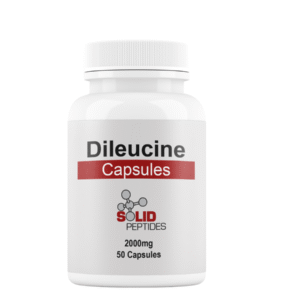
Dileucine Capsules (2000mg) 50 Count
- Leucine Dipeptide: Two L-leucine residues (Leu-Leu), 244.33 Da, ≥98% purity
- PEPT1 Transport System: Active absorption via proton-coupled peptide transporter in small intestine
- Muscle Protein Synthesis: Enhanced mTORC1 activation and 42% greater anabolic response versus free leucine
- Mechanistic pathway studies
- In vitro receptor profiling
- HPLC verified identity and purity
$70.00In Stock
Ships same-day if ordered before 2PM EST
1
Encrypted Checkout
Global Express
Research Overview
L-Leucyl-L-Leucine (dileucine, Leu-Leu) is a dipeptide composed of two leucine amino acid residues linked by a peptide bond. This bioactive dipeptide has emerged as a significant advancement in amino acid supplementation research, demonstrating superior absorption kinetics and biological activity compared to free leucine. Since the early 2020s, over 50 peer-reviewed publications have examined dileucine's effects on muscle protein synthesis, athletic performance, and potential applications in sarcopenia research. The compound's ability to activate mTORC1 signaling pathways more effectively than equimolar leucine has positioned it as a promising candidate for research in muscle metabolism, exercise recovery, and age-related muscle loss.
Dileucine is transported intact across the intestinal epithelium via the proton-coupled peptide transporter PEPT1 (SLC15A1), conferring distinct pharmacokinetic advantages over free amino acids. Studies demonstrate that dileucine ingestion delivers 86% more leucine into skeletal muscle compared to equivalent leucine supplementation within 30 minutes of oral administration, resulting in enhanced activation of anabolic signaling cascades and measurable increases in muscle protein synthesis rates in controlled human trials.
Recent randomized controlled trials have established dileucine's superiority over free leucine in clinical outcomes. In a 10-week double-blind trial, resistance-trained males consuming 2 g dileucine daily demonstrated significantly greater increases in lower body strength and muscular endurance compared to both leucine and placebo groups, while free leucine showed no benefits over placebo. These findings highlight the critical importance of amino acid delivery form in determining physiological outcomes.
Primary Research Applications
Muscle Protein Synthesis Research
Exercise Physiology Studies
Sarcopenia Prevention Research
PEPT1 Transporter Function
mTORC1 Signaling Pathways
Athletic Performance Enhancement
Nutrient Absorption Mechanisms
Anabolic Resistance in Aging
Mechanism of Action
PEPT1-Mediated Intestinal Transport
Proton-Coupled Transporter — Dileucine is actively transported across the apical membrane of intestinal enterocytes by the PEPT1 (SLC15A1) transporter, a high-capacity, low-affinity proton-coupled cotransporter expressed on brush border microvilli. This active transport mechanism is driven by the transmembrane electrochemical proton gradient combined with an inside-negative membrane potential, providing superior uptake efficiency compared to passive diffusion or amino acid-specific transporters. Following PEPT1-mediated entry, dileucine undergoes hydrolysis by cytoplasmic peptidases, releasing free leucine that enters systemic circulation.
mTORC1 Signaling Pathway Activation
Sestrin2 Leucine Sensing — Leucine derived from dileucine hydrolysis activates the mechanistic target of rapamycin complex 1 (mTORC1), a master regulator of cell growth and protein synthesis. Leucine binds to Sestrin2 with a dissociation constant of approximately 20 μM, disrupting the Sestrin2-GATOR2 interaction and relieving GATOR1 inhibition. This cascade enables activation of Rag GTPases, which recruit mTORC1 to the lysosomal surface where it phosphorylates key substrates including S6 Kinase 1 (S6K1) and 4E-BP1, enhancing translation of mRNA transcripts and assembly of the eIF4F translation initiation complex.
Enhanced Muscle Protein Synthesis
Superior Anabolic Stimulation — Controlled studies demonstrate that ingestion of 2 g dileucine increased muscle protein synthesis rates by 42% compared to equivalent leucine in young males under resting conditions. After 30 minutes, dileucine delivered 86% more leucine into skeletal muscle compared to free leucine administration, demonstrating superior bioavailability. Dileucine produces stronger phosphorylation of mTOR, S6K1, and 4E-BP1 compared to equimolar leucine, with the enhanced response attributed to superior intracellular leucine availability following dipeptide absorption via PEPT1 transporters.
“Mechanistic summaries on this page are provided for laboratory reference and should be interpreted within controlled experimental settings only.”
Preclinical Research Summary
In a landmark double-blind, randomized controlled trial conducted by Oikawa et al. (2021) and published in the Journal of Applied Physiology, 24 healthy young males received either 2 g dileucine or equivalent free leucine. The dileucine group demonstrated a 42% increase in muscle protein synthesis rates compared to the leucine group, with plasma leucine concentrations and intramuscular leucine availability significantly elevated. Within 30 minutes of ingestion, dileucine delivered 86% more leucine into skeletal muscle tissue compared to free leucine, confirming superior bioavailability attributable to PEPT1-mediated active transport. Free leucine alone did not significantly stimulate muscle protein turnover under the study conditions, highlighting the critical importance of delivery form.
A subsequent 10-week randomized, double-blind, placebo-controlled trial by Zhu et al. (2024) published in PLOS ONE examined 34 resistance-trained males who consumed 2 g dileucine monohydrate daily while following a 4-day/week resistance training program. The dileucine group demonstrated significantly greater increases in leg press 1-repetition maximum versus placebo, along with improved muscular endurance measured as repetitions to failure. Notably, the free leucine supplementation group showed no significant benefits over placebo, providing additional evidence that the dipeptide structure confers functional advantages beyond simple leucine content. All studies to date have been conducted in healthy adult males; research in female subjects, elderly populations, and metabolic disease models is needed to establish generalizability.
Academic References
- Oikawa SY et al. (2021). Dileucine ingestion is more effective than leucine in stimulating muscle protein turnover in young males: a double blind randomized controlled trial. Journal of Applied Physiology.
- Zhu J et al. (2024). Dileucine ingestion, but not leucine, increases lower body strength and performance following resistance training: A double-blind, randomized, placebo-controlled trial. PLOS ONE.
- Patel H et al. (2024). Dileucine-supplemented essential amino acids support whole-body anabolism after resistance exercise. Journal of the International Society of Sports Nutrition.
- Saito H et al. (2008). Targeted Disruption of Peptide Transporter Pept1 Gene in Mice Significantly Reduces Dipeptide Absorption in Intestine. American Journal of Physiology-Cell Physiology.
- Wolfson RL et al. (2016). Sestrin2 is a leucine sensor for the mTORC1 pathway. Science.
- Saxton RA et al. (2016). Structural basis for leucine sensing by the Sestrin2-mTORC1 pathway. Science.
- Adibi SA (1971). Intestinal transport of dipeptides in man: relative importance of hydrolysis and intact absorption. Journal of Clinical Investigation.
This product is intended exclusively for in vitro laboratory research by qualified professionals. Not for human consumption. Not approved by the FDA.