Research Use Only: This product is supplied for laboratory research and in-vitro studies. Not for human or veterinary administration.
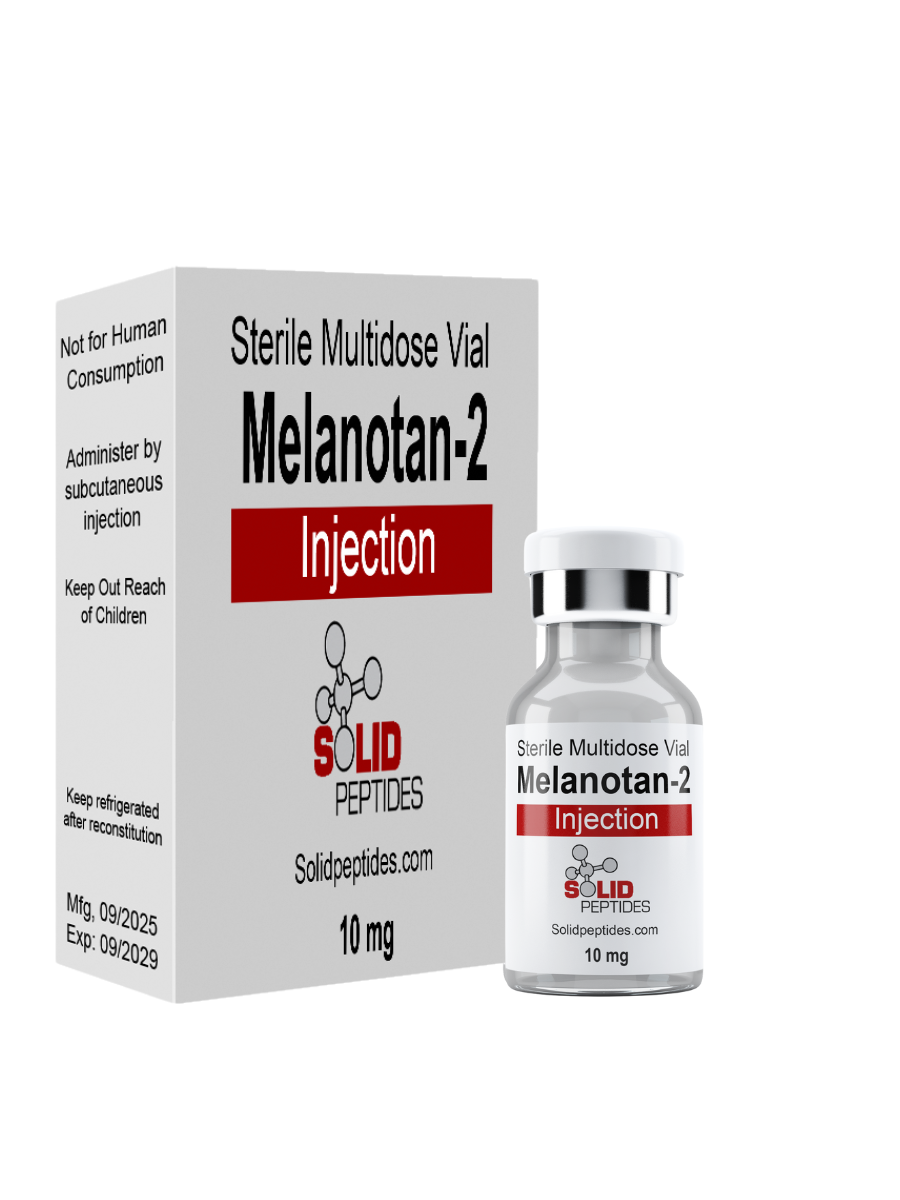
Melanotan-2 (10mg)
- Cyclic heptapeptide analog of alpha-MSH with 100-1000x greater potency at melanocortin receptors
- Pan-agonist of MC1R, MC3R, MC4R, MC5R with extended half-life (~33 hours vs. minutes for native alpha-MSH)
- Validated in 400+ publications across pigmentation, energy homeostasis, sexual function, neuroprotection, and cardiovascular research
- Mechanistic pathway studies
- In vitro receptor profiling
- HPLC verified identity and purity
Ships same-day if ordered before 2PM EST
Research Overview
MT-II has been extensively validated across multiple research domains with key findings including:
- MC1R-Mediated Melanogenesis: Binds MC1R on melanocytes with high affinity (Ki = 0.67 nM), triggering cAMP/PKA/CREB/MITF signaling cascade leading to tyrosinase, TRP-1, and TRP-2 upregulation. Early Phase I human pilot study by Dorr et al. (1996) demonstrated measurable skin darkening at 0.025 mg/kg subcutaneous within one week
- MC4R-Mediated CNS Effects: Activates centrally expressed MC4R in paraventricular nucleus, lateral hypothalamus, brainstem, and spinal cord. Produces dose-dependent appetite suppression (30-50% food intake reduction), energy expenditure increase via UCP1 upregulation in brown adipose tissue, enhanced insulin sensitivity through GLUT4 upregulation, and erectogenic effects via oxytocin pathway activation
- Sexual Function: Wessells et al. (1998) double-blind placebo-controlled crossover trial in men with psychogenic erectile dysfunction: MT-II at 0.025 mg/kg subcutaneous produced clinically apparent erections in 8 of 10 subjects; mean tip rigidity exceeding 80% persisted for 38.0 minutes versus 3.0 minutes with placebo (P = 0.0045). Served as structural template for bremelanotide (PT-141), FDA-approved MC4R agonist
- Adipose Tissue Remodeling: Strader et al. (2007) demonstrated peripheral MT-II reduced both visceral (retroperitoneal WAT -46.3%) and subcutaneous (epididymal WAT -21.1%) adipose tissue in high-fat-fed mice. Pair-fed controls lost equivalent weight but retained more adipose tissue, indicating mechanisms beyond caloric restriction. Zhang et al. (2010) showed intermittent dosing reduced adiposity by ~80% with elevated ACC1 phosphorylation suggesting enhanced fatty acid oxidation
- Neuroprotection: Ter Laak et al. (2003) showed MT-II at 20 μg/kg per 48 hours significantly enhanced sensory function recovery following sciatic nerve crush injury and partially protected against cisplatin-induced toxic neuropathy. Catania (2008) review documented melanocortin neuroprotection through NF-κB modulation, reduced pro-inflammatory agent production, and broad therapeutic window in brain ischemia models
- Cardiovascular: Rinne et al. (2014) demonstrated MT-II reduced 18F-FDG uptake in atherosclerotic plaques, shifted macrophages toward anti-inflammatory M2 phenotypes, enhanced endothelium-dependent relaxation, and reduced intraplaque hemorrhage from 16% to 4% in LDLR-/-;ApoB100/100 mice. Benefits occurred without changes in body weight or cholesterol, indicating direct anti-inflammatory mechanism
- Alcohol Use Disorder: Navarro et al. (2015) showed MT-II synergistically augmented naltrexone efficacy in binge-like ethanol intake models, with 4.2-fold greater potency than naltrexone alone. MC4R identified as primary mediator
Safety Concerns: Case reports document serious adverse events including rhabdomyolysis, renal infarction, cutaneous melanoma (5+ cases), and oral mucosal malignant melanoma associated with MT-II use. Chronic melanocortin activation increases blood pressure. Phase I studies documented nausea, somnolence, fatigue, and spontaneous penile erections as common side effects.
Primary Research Applications
Mechanism of Action
MT-II operates through multiple melanocortin receptor-mediated pathways:
1. MC1R-Mediated Melanogenesis:
MT-II binds MC1R on melanocytes (Ki = 0.67 nM), activating the Gs-protein/adenylyl cyclase/cAMP cascade. Elevated cAMP activates PKA, which phosphorylates CREB, upregulating microphthalmia-associated transcription factor (MITF). MITF drives expression of melanogenic enzymes (tyrosinase, TRP-1, TRP-2/DCT), catalyzing tyrosine conversion to photoprotective eumelanin via DOPA and dopaquinone intermediates. MC1R activation also enhances nucleotide excision repair (NER) of UV-induced DNA damage and activates antioxidant defense mechanisms via cAMP-dependent pathways.
2. MC4R-Mediated Central Nervous System Effects:
MT-II's cyclic structure and moderate lipophilicity enable blood-brain barrier penetration. MC4R activation in paraventricular nucleus, lateral hypothalamus, brainstem, and spinal cord produces:
- Appetite Suppression: Dose-dependent hypophagia (30-50% food intake reduction in rodent models); abolished in MC4R knockout mice
- Energy Expenditure: Increases oxygen consumption and thermogenesis via sympathetic nervous system activation and UCP1 upregulation in brown adipose tissue
- Insulin Sensitivity: Enhances peripheral glucose disposal by upregulating GLUT4 mRNA expression in skeletal muscle (~3-fold increase), independent of feeding effects
- Sexual Function: Activates oxytocin pathways mediating erectile function and sexual motivation; human studies showed 17 of 20 men with ED experienced penile erection at 0.025 mg/kg subcutaneous
3. Adipose Tissue Direct Effects:
MT-II reduces adiposity through mechanisms beyond appetite suppression. Pair-fed control animals losing equivalent weight retained more adipose tissue than MT-II-treated animals, indicating direct lipolytic effects. Intermittent MT-II application reduces adiposity by ~80% with elevated ACC1 phosphorylation in fat tissue, suggesting enhanced fatty acid oxidation. Peripheral MT-II activates sympathetic nervous system signaling in white adipose tissue, promoting lipid mobilization.
4. Neuroprotection via NF-κB Modulation:
Melanocortins including MT-II modulate NF-κB-mediated transcription, reducing production of pro-inflammatory agents (TNF-α, IFN-γ) in brain cells and Schwann cells after injury. Provides protective influences during brain ischemia, rescues neurons from excitotoxic insults, and accelerates neurophysiological recovery after spinal cord injury.
5. Mast Cell Activation (Off-Target Effect):
MT-II activates mast cells through MRGPRB2-dependent and independent pathways, triggering histamine release. Released histamine binds H1 receptors, producing dose-dependent hypothermia. This mechanism explains flushing, nausea, and temperature changes observed as common side effects.
“Mechanistic summaries on this page are provided for laboratory reference and should be interpreted within controlled experimental settings only.”
Preclinical Research Summary
MT-II has been validated in over 400 peer-reviewed publications spanning four decades:
- Human Pilot Studies: Dorr et al. (1996) single-blind placebo-controlled study in 3 healthy males with doses escalating 0.01-0.03 mg/kg subcutaneous; 2 of 3 subjects showed increased facial/body pigmentation one week post-dosing. Side effects: mild nausea, Grade II somnolence/fatigue, spontaneous penile erections (1-5 hours). Wessells et al. (1998) double-blind crossover trial in 10 men with psychogenic ED: 0.025 mg/kg subcutaneous produced erections in 8 of 10 subjects; mean tip rigidity >80% for 38.0 min vs 3.0 min placebo (P=0.0045)
- Energy Homeostasis: Heijboer et al. (2005) intracerebroventricular MT-II (225 ng/24h) increased glucose disposal in hyperinsulinemic-euglycemic clamp (151±20 vs 108±20 μmol/min/kg, P<0.01) with 3-fold increase in skeletal muscle GLUT4 mRNA
- Adipose Tissue: Strader et al. (2007) peripheral MT-II reduced retroperitoneal WAT by 46.3% and epididymal WAT by 21.1% in high-fat-fed mice; pair-fed controls lost equivalent weight but retained more adipose tissue. Zhang et al. (2010) intermittent MT-II reduced adiposity by ~80% in F344/BN rats with reduced MC4R expression and elevated ACC1 phosphorylation
- Neuroprotection: Ter Laak et al. (2003) MT-II at 20 μg/kg per 48h significantly enhanced sensory function recovery following sciatic nerve crush injury in Wistar rats (bell-shaped dose-response); partially protected against cisplatin-induced toxic neuropathy
- Cardiovascular: Rinne et al. (2014) 4-week MT-II infusion in atherosclerotic mice reduced 18F-FDG plaque uptake, doubled cap/core ratio in early plaques, increased vSMC content 2-fold in advanced plaques, reduced intraplaque hemorrhage from 16% to 4%. Enhanced endothelium-dependent relaxation without changing body weight/cholesterol
- Melanoma Research: Wu et al. (2020) topical MT-II reduced B16-F10 melanoma tumor volume to 50% of control (989 vs 2017 mm³), decreased Ki-67+ cells, increased apoptosis. Mechanism: MC1R-dependent PTEN upregulation with decreased phospho-PTEN, inhibiting AKT/NF-κB and suppressing COX-2/PGE2
- Alcohol Use: Navarro et al. (2015) showed MT-II synergistically augmented naltrexone efficacy in binge-like ethanol intake models (4.2-fold greater potency than naltrexone alone); MC4R identified as primary mediator in MC3R-deficient mice studies
- Safety Concerns (Human Case Reports): Bohm et al. (2025) review documented at least 5 melanoma cases associated with MT-II use (all with additional risk factors: fair skin, excess sun/tanning bed exposure, family history). Alsabbagh et al. (2025) reported first oral mucosal malignant melanoma associated with MT-II nasal spray in 22-year-old female. Additional case reports of rhabdomyolysis, renal infarction, and sympathomimetic excess. Breindahl et al. (2015) analysis of internet-sold MT-II products revealed actual peptide content of 4.32-8.84 mg per vial despite 10 mg claims, with 4.1-5.9% unknown impurities
No comprehensive LD50, chronic toxicity, mutagenicity, or genotoxicity studies published. MT-II never progressed through standard IND-enabling toxicology programs.
Academic References
- Dorr, R. T., Lines, R., Levine, N., Brooks, C., Xiang, L., Hruby, V. J., & Hadley, M. E. (1996). Evaluation of melanotan-II, a superpotent cyclic melanotropic peptide in a pilot phase-I clinical study. Life Sciences, 58(20), 1777-84. PMID: 8637402
- Wessells, H., Fuciarelli, K., Hansen, J., Hadley, M. E., Hruby, V. J., Dorr, R., & Levine, N. (1998). Synthetic melanotropic peptide initiates erections in men with psychogenic erectile dysfunction: double-blind, placebo controlled crossover study. Journal of Urology, 160(2), 389-393. PMID: 9679884
- Ter Laak, M. P., Brakkee, J. H., Adan, R. A., Hamers, F. P., & Gispen, W. H. (2003). The potent melanocortin receptor agonist melanotan-II promotes peripheral nerve regeneration and has neuroprotective properties in the rat. European Journal of Pharmacology, 462(1-3), 179-83. PMID: 12591111
- Strader, A. D., Shi, H., Ogawa, R., Seeley, R. J., & Reizes, O. (2007). The effects of the melanocortin agonist (MT-II) on subcutaneous and visceral adipose tissue in rodents. Journal of Pharmacology and Experimental Therapeutics, 322(3), 1153-61. PMID: 17567964
- Rinne, P., Silvola, J. M., Hellberg, S., Ståhle, M., Liljenbeck, H., Salomäki, H., ... & Savontaus, E. (2014). Pharmacological activation of the melanocortin system limits plaque inflammation and ameliorates vascular dysfunction in atherosclerotic mice. Arteriosclerosis, Thrombosis, and Vascular Biology, 34(7), 1346-54. PMID: 24790139
- Bohm, M., Robert, C., Malhotra, S., Clement, K., & Farooqi, S. (2025). An overview of benefits and risks of chronic melanocortin-1 receptor activation. Journal of the European Academy of Dermatology and Venereology, 39(1), 39-51. PMID: 39082868
This product is intended exclusively for in vitro laboratory research by qualified professionals. Not for human consumption. Not approved by the FDA.