Research Use Only: This product is supplied for laboratory research and in-vitro studies. Not for human or veterinary administration.
Hover to zoom
Identity Verified: LC-MS
(0 Reviews)
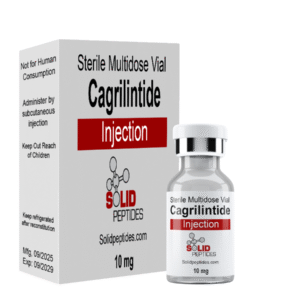
Cagrilintide (5mg) / Tirz (10mg)
- Triple-Receptor Agonist: Combines amylin, GIP, and GLP-1 pathways in one formulation
- Multi-Pathway Engagement: Three independent satiety and metabolic control mechanisms
- Research Blend: 5mg Cagrilintide + 10mg Tirzepatide, ≥98% purity each component
- Mechanistic pathway studies
- In vitro receptor profiling
- HPLC verified identity and purity
$149.00In Stock
Ships same-day if ordered before 2PM EST
1
Encrypted Checkout
Global Express
Research Overview
Cagrilintide/Tirzepatide Research Blend represents a novel triple-receptor agonist combination targeting three distinct metabolic regulatory pathways: amylin receptors (via Cagrilintide) plus dual GIP/GLP-1 receptors (via Tirzepatide). Tirzepatide alone has demonstrated unprecedented efficacy in clinical trials, with the SURMOUNT program showing up to 20.9% body weight reduction at 72 weeks. The addition of Cagrilintide (amylin analog) to this dual incretin agonist provides a research tool for investigating whether triple-pathway engagement offers advantages over dual-pathway approaches like CagriSema (amylin + GLP-1 only) or Tirzepatide (GIP + GLP-1 only).
The scientific rationale for this combination leverages complementary mechanisms across three receptor systems. Amylin receptors in the area postrema mediate meal termination and satiety signaling, GIP receptors regulate adipose tissue metabolism and incretin potentiation, while GLP-1 receptors control glucose-dependent insulin secretion and central appetite suppression. Unlike dual-agonist approaches, this formulation enables investigation of enhanced multi-pathway metabolic modulation with three independent satiety mechanisms operating simultaneously.
Tirzepatide's SURPASS program demonstrated superior efficacy compared to semaglutide 1mg in head-to-head trials, while SURMOUNT-1 showed that 63% of participants achieved ≥20% weight loss with the 15mg dose — unprecedented for pharmacotherapy. Recent Phase 2 studies of Cagrilintide have demonstrated dose-dependent weight loss and synergistic effects when combined with GLP-1 agonists, establishing proof-of-concept for dual amylin/incretin combinations. This triple-pathway blend extends that research frontier.
Primary Research Applications
Triple-Pathway Metabolic Research
Enhanced Obesity Research Models
Glucose Homeostasis Studies
Receptor Pharmacology Investigation
Comparative Combination Studies
Body Composition Analysis
Multi-Receptor Synergy Quantification
CNS Appetite Center Research
Mechanism of Action
Amylin Receptor Pathway
AMY1/2/3 Activation — Cagrilintide acts as a long-acting amylin analog (t½ ~7 days) binding to AMY1, AMY2, and AMY3 receptors, which are CTR + RAMP heterodimers. Receptor activation in the area postrema triggers Gαs-coupled signaling and cAMP/PKA pathway activation, producing satiety signals, delayed gastric emptying, and glucagon secretion suppression. This provides meal termination signaling independent of incretin pathways.
GIP Receptor Pathway
GIPR Full Agonism — Tirzepatide acts as a full agonist at the GIP receptor, generating cAMP in adipocytes and enhancing glucose-dependent insulin secretion from pancreatic beta cells. GIPR activation produces unique adipose tissue effects including lipid metabolism modulation and potential CNS contributions to energy balance. The GIP pathway provides incretin potentiation distinct from GLP-1.
GLP-1 Receptor Pathway
GLP-1R Biased Agonism — Tirzepatide demonstrates biased partial agonism at the GLP-1 receptor (Gαs > β-arrestin), promoting glucose-dependent insulin secretion while suppressing inappropriate glucagon release from pancreatic alpha cells. Central GLP-1R activation in hypothalamic POMC/CART neurons increases satiety signaling, while concurrent inhibition of NPY/AgRP neurons reduces orexigenic drive. GLP-1 pathway activation also provides cardiovascular protection effects.
Triple-Pathway Integration
Complementary CNS Effects — The combination engages three independent satiety pathways: amylin signaling in the area postrema for meal termination, GLP-1 signaling in hypothalamus and brainstem for appetite suppression and reward modulation, and GIP signaling in adipose tissue and potentially brain regions. This multi-pathway approach provides comprehensive glucose control through β-cell effects (GIP + GLP-1) combined with α-cell suppression (amylin + GLP-1), engaging CNS, pancreas, adipose, and GI tract simultaneously.
“Mechanistic summaries on this page are provided for laboratory reference and should be interpreted within controlled experimental settings only.”
Preclinical Research Summary
Tirzepatide's clinical efficacy is established through the landmark SURMOUNT-1 trial (2022, NEJM), which demonstrated 20.9% mean weight loss at 72 weeks with the 15mg dose in participants with obesity but without diabetes. Remarkably, 63% of participants achieved ≥20% weight loss, representing unprecedented efficacy for pharmacotherapy. The SURPASS-2 head-to-head comparison against semaglutide 1mg showed superior HbA1c reduction and greater weight loss, establishing Tirzepatide as the most effective incretin-based therapy to date.
Cagrilintide Phase 2 studies conducted by Novo Nordisk have demonstrated dose-dependent weight loss when used as monotherapy, with favorable safety profiles reported. Critically, combination studies with semaglutide revealed synergistic effects beyond additive outcomes, providing proof-of-concept that dual amylin/incretin pathway engagement produces enhanced metabolic benefits. This blend extends that concept to triple-pathway coverage by combining amylin (Cagrilintide) with the dual GIP/GLP-1 activity of Tirzepatide, creating the first research formulation with simultaneous amylin, GIP, and GLP-1 receptor engagement.
It is important to note that while Tirzepatide is FDA-approved (Mounjaro®, Zepbound®), Cagrilintide remains investigational with Phase 3 trials ongoing. This specific combination represents a novel research formulation not approved for clinical use. The majority of published Cagrilintide data comes from preclinical and early-phase human trials, while Tirzepatide's efficacy is firmly established in large-scale randomized controlled trials.
Academic References
- Jastreboff AM et al. (2022). Tirzepatide Once Weekly for the Treatment of Obesity (SURMOUNT-1). New England Journal of Medicine.
- Frías JP et al. (2021). Tirzepatide versus Semaglutide Once Weekly in Patients with Type 2 Diabetes (SURPASS-2). New England Journal of Medicine.
- Rosenstock J et al. (2021). Efficacy and Safety of a Novel Dual GIP and GLP-1 Receptor Agonist Tirzepatide in Patients with Type 2 Diabetes (SURPASS-1). New England Journal of Medicine.
- Garvey WT et al. (2023). Tirzepatide once weekly for the treatment of obesity in people with type 2 diabetes (SURMOUNT-2). The Lancet.
- Lutz TA (2012). Control of food intake and energy expenditure by amylin - physiological and clinical implications. Physiology & Behavior.
- Hay DL et al. (2015). Amylin: Pharmacology, Physiology, and Clinical Potential. Pharmacological Reviews.
This product is intended exclusively for in vitro laboratory research by qualified professionals. Not for human consumption. Not approved by the FDA.
Published Research Briefs
Our research team has published evidence-checked briefs covering the science behind this compound. Each brief reviews primary sources and grades claims independently.