Research Use Only: This product is supplied for laboratory research and in-vitro studies. Not for human or veterinary administration.
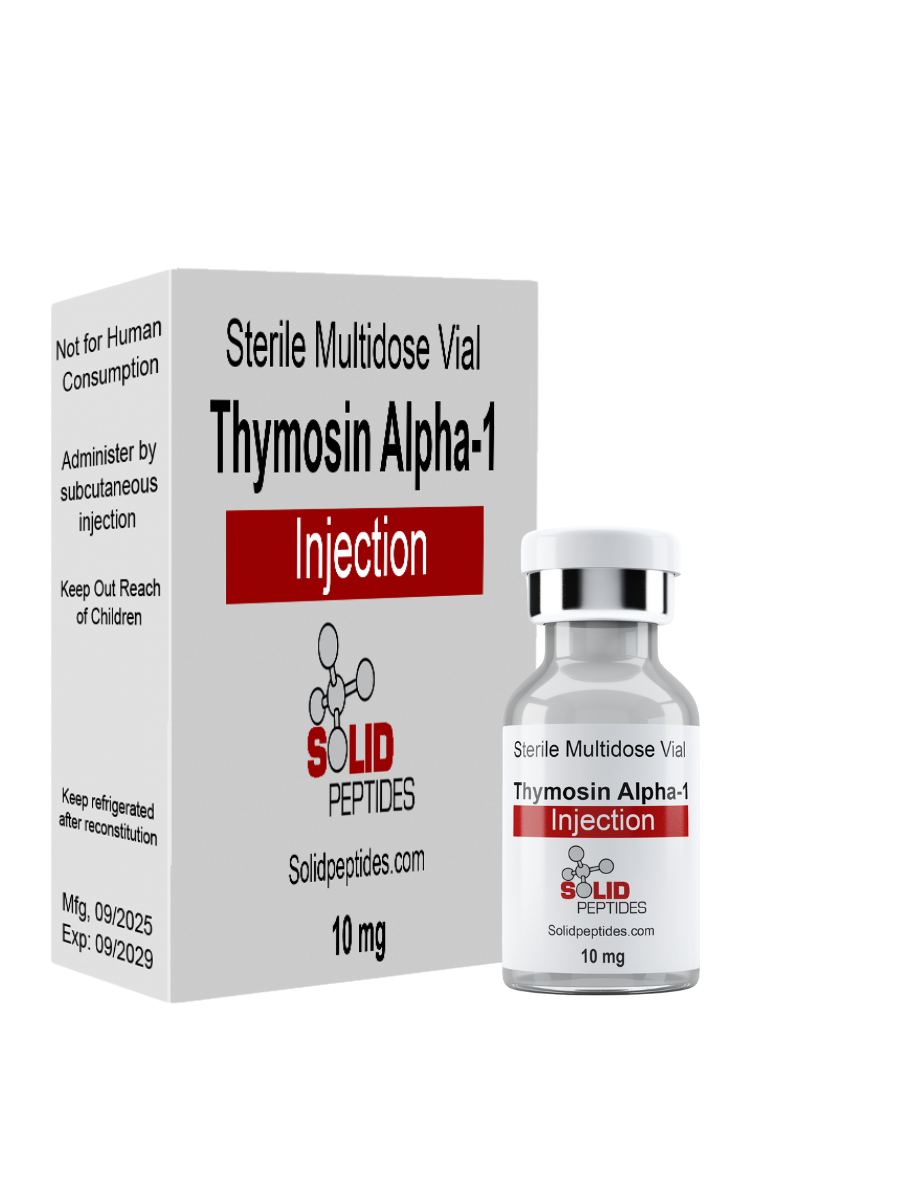
Hover to zoom
Identity Verified: LC-MS
(0 Reviews)
Thymosin Alpha-1
- 28-Amino Acid Immunomodulator: N-terminal fragment of prothymosin alpha (Ac-SDAAVDTSSEITTKDLKEKKEVVEEAEN); CAS 62304-98-7; MW 3,108.28 Da; ≥95% HPLC purity; 3,000+ PubMed publications; N-terminal acetylation confers resistance to aminopeptidase degradation
- Pleiotropic Immune Signaling Research: TLR2/TLR3/TLR4/TLR7/TLR9 agonist; dendritic cell maturation (MHC-II, CD80/CD86/CD40 upregulation); T-cell differentiation (CD4+/CD8+); Th1 polarization (IL-2/IL-12/IFN-γ); NK cell activation; PD-1/Tim-3 exhaustion marker regulation
- Broad Clinical Investigation: Thymalfasin (Zadaxin) — pharmaceutical with this amino acid sequence — is approved in 35+ countries; clinical investigation in COVID-19 lymphocytopenia (Liu et al., 2020), sepsis immunology meta-analyses (Liu et al., 2016; Tian et al., 2025), HBV/HCC biology, and vaccine adjuvancy research
- Mechanistic pathway studies
- In vitro receptor profiling
- HPLC verified identity and purity
$54.00In Stock
Ships same-day if ordered before 2PM EST
1
Encrypted Checkout
Global Express
Research Overview
Thymosin Alpha-1 (Tα1; Ac-SDAAVDTSSEITTKDLKEKKEVVEEAEN) (CAS 62304-98-7) is a synthetic 28-amino acid immunomodulatory peptide representing the N-terminal fragment of prothymosin alpha, originally isolated from thymic tissue in 1977. Prothymosin alpha is a highly conserved 113-amino acid chromatin-remodeling protein; Tα1 is generated from it via proteolytic cleavage by the lysosomal enzyme legumain. The N-terminal acetylation confers resistance to aminopeptidase degradation. Supplied as a lyophilized powder for in vitro research, intended strictly for qualified researchers. Certificate of Analysis (CoA) provided with every lot. Not for human or veterinary consumption.
Tα1 functions as a Toll-like receptor (TLR) agonist, binding TLR2, TLR3, TLR4, TLR7, and TLR9 on myeloid and plasmacytoid dendritic cells (mDCs and pDCs). Romani et al. (2004, Blood) demonstrated Tα1 activates dendritic cells for antifungal Th1 immune responses specifically through TLR9 signaling via a p38 MAPK/NF-κB-dependent pathway, enhancing IL-12 p70 release and Th1-polarized immune responses. Liu et al. (2020, Clin Infect Dis) reported a prospective cohort of 76 severe COVID-19 patients (38 Tα1, 38 controls): Tα1-treated patients showed restored CD4+/CD8+ T-cell counts and decreased PD-1/Tim-3 exhaustion markers on CD8+ T cells. Liu et al. (2016, BMC Infect Dis) meta-analysis of 10 RCTs with 530 sepsis patients characterized immune parameter modulation; Tian et al. (2025, Front Immunol) meta-analysis of 5 RCTs with 706 patients characterized extrapancreatic infection incidence modulation.
Over 3,000 PubMed-indexed publications reference Tα1 across TLR signaling biology, dendritic cell maturation, T-lymphocyte differentiation, cancer immunology, viral infection models, sepsis immunology, and vaccine adjuvancy research. Thymalfasin (Zadaxin) is an approved pharmaceutical product with this amino acid sequence, approved in over 35 countries for hepatitis B and HCC indications. Tα1 research material supplied here is manufactured independently as a research reagent and is not sourced from or authorized by Sciclone Pharmaceuticals. This research product is not approved by the FDA for human use.
Primary Research Applications
TLR Pathway Pharmacology (TLR2/TLR3/TLR4/TLR7/TLR9 agonism; MyD88-dependent NF-κB; TRIF/IRF3/IRF7 Type I IFN induction)
Dendritic Cell Maturation Research (mDC/pDC activation; MHC-II, CD80, CD86, CD40 upregulation; phagocytic capacity; DC migration)
T-Lymphocyte Differentiation Biology (CD4+/CD8+ maturation; IL-2 receptor upregulation; T-cell proliferative response; exhaustion marker regulation)
Th1 Cytokine Network Research (IL-2, IL-12, IFN-γ, IFN-α induction; IL-10 regulatory modulation)
NK Cell Activation and Innate Immunity Investigation
Sepsis Immunology Research (meta-analysis validation models; immune parameter modulation)
Viral Infection Immunology (hepatitis B virus biology; COVID-19 lymphocytopenia models; CD4+/CD8+ restoration research)
Cancer Immunotherapy Research (HCC, melanoma, and tumor immunology models; IDO1 tolerogenic programming)
Vaccine Adjuvancy and Immunogenicity Research
Antioxidant Enzyme Biology (SOD, GSH-Px, CAT activity modulation; ischemia-reperfusion models)
NF-κB and MAPK Inflammatory Pathway Research
IDO1-Dependent Tolerogenic DC Programming Research
Mechanism of Action
TLR Agonism — Direct Pattern Recognition Receptor Binding
Multi-TLR Engagement — Thymosin Alpha-1 directly binds Toll-like receptors TLR2, TLR3, TLR4, TLR7, and TLR9 on myeloid dendritic cells (mDCs) and plasmacytoid dendritic cells (pDCs). Romani et al. (2004, Blood) demonstrated that TLR9 is the primary receptor mediating antifungal Th1 immune activation, with Tα1 activating p38 MAPK/NF-κB-dependent signaling in fungus-pulsed dendritic cells, enhancing IL-12 p70 release and promoting T-helper type 1 immune polarization. Wu et al. (2020, Front Pharmacol) detailed the downstream signal transduction cascades: (1) MyD88-dependent pathway leading to TRAF6-IKK-NF-κB nuclear translocation and pro-inflammatory cytokine gene transcription; (2) IRF3/IRF7 pathway inducing Type I interferon (IFN-α, IFN-β) production; (3) p38 MAPK/JNK pathway regulating inflammatory mediator expression.
Dendritic Cell Maturation and Antigen Presentation
Functional DC Activation — Tα1 induces functional maturation of both myeloid and plasmacytoid dendritic cell subsets: enhancing phagocytic activity of immature DCs, increasing expression of HLA class II antigens (MHC-II) and costimulatory molecules (CD80, CD86, CD40), and promoting DC migration to lymphoid organs. Through TLR9/MyD88-dependent signaling, Tα1 activates the TRAF6-IKK-NF-κB pathway in DCs, resulting in enhanced antigen presentation capacity. Tα1 also activates indoleamine 2,3-dioxygenase 1 (IDO1)-dependent tolerogenic programs in DCs, contributing to maintenance of self-tolerance.
T-Lymphocyte Maturation and Exhaustion Biology
CD4+/CD8+ Differentiation and Exhaustion Marker Regulation — Tα1 promotes T-lymphocyte development through multiple pathways: enhancing thymocyte maturation into CD4+ helper T cells and CD8+ cytotoxic T cells, increasing IL-2 receptor expression following mitogenic/antigenic stimulation, and augmenting T-cell proliferative responses. In lymphopenic models, Tα1 treatment increases peripheral blood CD4+/CD8+ T-cell counts and reduces expression of exhaustion markers PD-1 and Tim-3 on CD8+ T cells (Liu et al., 2020).
Th1 Cytokine Network Modulation
Dual Immune Activation and Inflammatory Restraint — Tα1 orchestrates Th1-polarized cytokine responses, significantly increasing production of IL-2, IL-12, IFN-γ, and IFN-α while maintaining regulatory balance through IL-10 modulation. Simultaneously, Tα1 demonstrates anti-inflammatory properties by suppressing IL-1β and TNF-α expression, preventing excessive inflammatory tissue damage. The peptide also enhances NK cell activity and stimulates migration inhibitory factor (MIF) production.
Antioxidant Enzyme Activity
Cytoprotection via Enzymatic Antioxidant Upregulation — Thymosin Alpha-1 demonstrates direct antioxidant activity by enhancing expression and activity of superoxide dismutase (SOD), glutathione peroxidase (GSH-Px), and catalase (CAT). This reduces oxidative damage to lipids, proteins, and DNA, protecting tissues from ischemia-reperfusion injury and inflammatory oxidative stress. Cytoprotective properties extend to hepatocytes, cardiomyocytes, and lymphocytes in preclinical models.
“Mechanistic summaries on this page are provided for laboratory reference and should be interpreted within controlled experimental settings only.”
Preclinical Research Summary
Thymosin Alpha-1 is supplied as a lyophilized powder for in vitro research and is studied in cell culture, rodent models, and clinical investigations. Over 3,000 peer-reviewed publications reference the compound. Intended strictly for qualified researchers.
TLR Biology: Romani et al. (2004, Blood): radioligand binding studies confirmed Tα1 binds specifically to TLR9 on dendritic cells; activates p38 MAPK/NF-κB-dependent pathway in fungus-pulsed DCs; promotes IL-12 p70 production and Th1-polarized immune responses. Wu et al. (2020, Front Pharmacol): detailed analysis of MyD88-dependent (TRAF6/IKK/NF-κB) and TRIF-dependent (IRF3/IRF7/IFN) signal transduction pathways downstream of Tα1 TLR binding.
T-Cell and DC Research: In vitro studies: Tα1 (1–10 μg/mL) enhanced phagocytic activity of immature DCs, increased expression of HLA class II (MHC-II), CD80, CD86, and CD40, promoted DC migration to lymphoid organs. T-cell maturation studies showed enhanced thymocyte maturation into CD4+/CD8+ T cells, increased IL-2 receptor expression, augmented T-cell proliferative responses. Aging mouse models: Tα1 administration (10–100 μg/kg) restored impaired helper T-cell activity in spleen cells.
COVID-19 Clinical Investigation: Liu et al. (2020, Clin Infect Dis) prospective cohort of 76 severe COVID-19 patients (38 Tα1, 38 controls): Tα1-treated patients showed restored CD4+/CD8+ T-cell counts and decreased PD-1/Tim-3 exhaustion markers on CD8+ T cells. China National Health Commission included Tα1 as an alternative investigation modality for COVID-19 lymphocytopenia (2020).
Sepsis Immunology Research: Liu et al. (2016, BMC Infect Dis) meta-analysis of 10 RCTs with 530 sepsis patients: Tα1-treated group showed modulated immune parameters vs. control (RR 0.59, 95% CI 0.45–0.77), with greater effect magnitude in severe sepsis subgroups vs. septic shock. Tian et al. (2025, Front Immunol) meta-analysis of 5 RCTs with 706 patients: Tα1 significantly reduced overall extrapancreatic infection incidence (RR 0.56, 95% CI 0.40–0.78, p = 0.0005), blood infections (RR 0.60), and abdominal infections (RR 0.38).
Hepatitis B/HCC Research: Peng et al. (2020, BMC Gastroenterol) systematic review and meta-analysis: combination therapy (entecavir plus Tα1) characterized in HBV-related cirrhosis — improved virological and immunological parameters, enhanced HBV DNA suppression, reduced liver disease progression markers. Dinetz (2024, Alt Ther Health Med): systematic analysis of 11,000+ subjects across 30+ RCTs; characterized as well-tolerated immunomodulator across COVID-19, autoimmune disorders, and cancer research; no serious adverse events attributable to Tα1 in any trial reviewed.
Safety: Animal toxicology showed no adverse reactions at single doses up to 20 mg/kg (800-fold human clinical dose) or repeated doses up to 6 mg/kg/day for 13 weeks in mice, rats, and marmosets. Longer-term toxicology studies (26 weeks at 1 mg/kg/day) revealed no drug-related pathological findings. LD₅₀ values not established. No genotoxicity in Ames test or mammalian micronucleus tests. Teratology studies in mice/rabbits showed no increase in fetal abnormalities at doses up to 100-fold the human therapeutic dose. Most common documented adverse event in clinical research: mild, transient injection site reactions (<5% of subjects). Not for human or veterinary consumption, diagnosis, treatment, prevention, or cure of any condition.
Academic References
- Romani L et al. (2004). Thymosin α1 activates dendritic cells for antifungal Th1 resistance through Toll-like receptor signaling. Blood. 103(11):4232–9.
- Liu Y et al. (2020). Thymosin alpha-1 reduces the mortality of severe coronavirus disease 2019 by restoration of lymphocytopenia and attenuation of cytokine storm. Clin Infect Dis. 71(16):2150–2157.
- Liu F et al. (2016). Meta-analysis of thymosin alpha 1 for sepsis: evidence from 10 randomized controlled trials. BMC Infect Dis. 16:390.
- Tian Y et al. (2025). Efficacy of thymosin alpha-1 on extrapancreatic infections in severe acute pancreatitis: meta-analysis. Front Immunol.
- Wu Y et al. (2020). The function and mechanism of thymosin alpha1 in immunity and disease. Front Pharmacol. 11:217.
- Dinetz E (2024). Thymosin alpha-1 as an immune modulator: systematic analysis across COVID-19, autoimmune disorders, and cancer. Altern Ther Health Med.
- Peng WJ et al. (2020). The efficacy and safety of entecavir plus thymosin alpha 1 therapy in HBV-related cirrhosis: systematic review. BMC Gastroenterol. 20(1):153.
- Goldstein AL et al. (1994). Thymosin alpha one: biological activity and clinical applications. Cancer Invest. 12(5):545–52.
This product is intended exclusively for in vitro laboratory research by qualified professionals. Not for human consumption. Not approved by the FDA.
Published Research Briefs
Our research team has published evidence-checked briefs covering the science behind this compound. Each brief reviews primary sources and grades claims independently.