Research Use Only: This product is supplied for laboratory research and in-vitro studies. Not for human or veterinary administration.
Hover to zoom
Identity Verified: LC-MS
(0 Reviews)
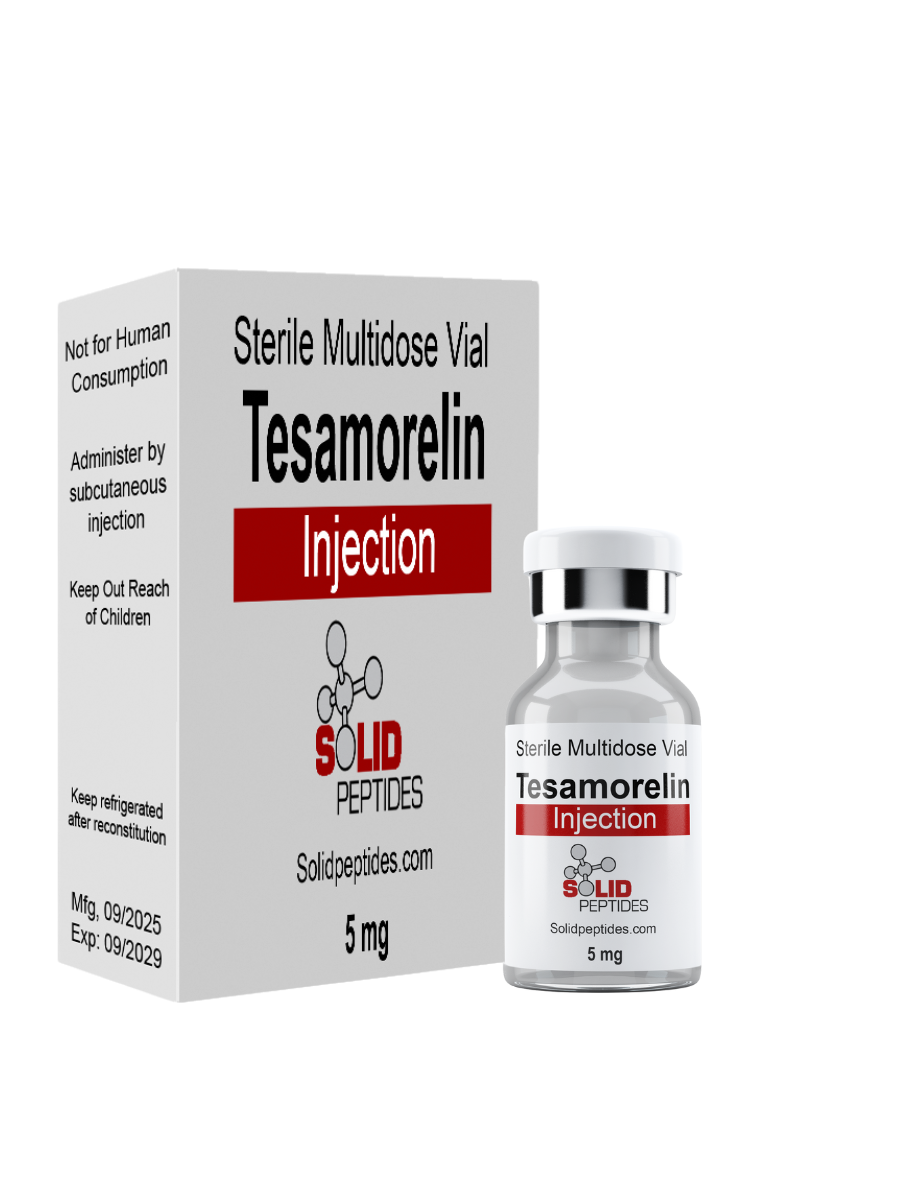
Tesamorelin (2mg)
- Synthetic GHRH Analog: 44-amino acid polypeptide with N-terminal trans-3-hexenoic acid modification; enhanced DPP-IV resistance extends half-life to 26–38 min vs. minutes for native GHRH; 150+ PubMed publications
- Physiological GH Axis Modulation: Selective GHRH-R agonist preserving pulsatile GH secretion patterns and IGF-1 feedback regulation; studied in clinical trials for metabolic effects in HIV-associated lipodystrophy
- Regulatory Status: Tesamorelin (Egrifta) authorized 2010 for HIV-associated lipodystrophy; Egrifta WR (F8 formulation) authorized March 2025 with reconstitution updates; ongoing research in neurocognitive and hepatic biology
- Mechanistic pathway studies
- In vitro receptor profiling
- HPLC verified identity and purity
$40.00In Stock
Ships same-day if ordered before 2PM EST
1
Encrypted Checkout
Global Express
Research Overview
Intended for use by qualified researchers in properly equipped laboratory facilities. Tesamorelin (44aa polypeptide: Trans-3-hexenoic acid-YADAIFTNSYRKVLGQLSARKLLQDIMSRQQGESNQERGARARL-NH₂) is a synthetic GHRH analog with over 150 publications spanning GHRH receptor pharmacology, GH axis biology, metabolic dysfunction research, and neurocognitive investigations.
Egrifta (tesamorelin acetate) was first authorized November 2010 for HIV-associated lipodystrophy — the first agent authorized for the metabolic sequelae of this condition. In March 2025 the supplemental BLA for Egrifta WR (tesamorelin F8 formulation) was authorized, with updated reconstitution, maintained bioequivalence, and injection volume reduced >50%.
Falutz et al. (2010, JAMA) randomized clinical trial established tesamorelin's metabolic effects in HIV-associated lipodystrophy at 26 weeks, documenting changes in adipose tissue distribution, hepatic fat content by CT imaging, and waist circumference parameters. Stanley et al. (2011) characterized GH secretion patterns under tesamorelin: increased mean overnight GH levels without disrupting circadian rhythms, preserved GH pulse amplitude and frequency, and IGF-1 increases approximately 181 ± 22 μg/L with intact feedback inhibition preventing excessive GH stimulation. Shivakumar & Stanley (2017) documented preservation of peripheral insulin-stimulated glucose uptake in patients with type 2 diabetes, distinguishing tesamorelin from continuous GH replacement therapy.
Trans-3-hexenoic acid modification provides DPP-IV resistance, extending half-life from minutes (native GHRH) to 26–38 minutes. Pharmacokinetics: Tmax 8–10 minutes SC, linear PK across 0.5–2 mg dose range, volume of distribution 9.4–10.5 L/kg, rapid clearance with no accumulation on daily dosing.
Primary Research Applications
GHRH receptor pharmacology and signal transduction (Gs-cAMP-PKA-CREB cascade characterization, somatotroph biology, receptor binding kinetics)
GH pulsatility research (physiological GH secretion pattern preservation, IGF-1 feedback axis studies, comparison with selective GLP-1R agonists)
GHRH analog structure-activity research (DPP-IV resistance mechanisms, N-terminal modification effects on half-life and receptor selectivity)
Metabolic biology research in HIV-associated lipodystrophy models (adipose tissue distribution biology, GH-IGF-1 axis dysfunction)
Hepatic lipid metabolism research (hepatic fat content modulation studies, lipid profile parameter investigations)
Neurocognitive function research (GH axis effects on brain biology, cognitive parameter studies in aging and HIV-associated models)
Insulin sensitivity research (glucose metabolism in metabolic dysfunction models, comparison with exogenous GH replacement effects)
Mechanism of Action
Tesamorelin functions as a selective agonist at GHRH receptors (GHRH-R), G protein-coupled receptors expressed predominantly on somatotroph cells of the anterior pituitary gland.
GHRH-R Activation and Gs-cAMP-PKA Cascade: Tesamorelin binds specifically to GHRH-R with affinity comparable to native GHRH, without significant off-target effects. Receptor engagement activates Gs proteins, which stimulate adenylyl cyclase to convert ATP to cAMP. Elevated cAMP activates protein kinase A (PKA), which phosphorylates CREB and related transcription factors, driving GH gene transcription and enhanced GH synthesis in somatotrophs. The cascade culminates in calcium-dependent exocytosis of GH-containing secretory granules.
Preservation of Physiological GH Pulsatility: Stanley et al. (2011) demonstrated tesamorelin increases mean overnight GH levels without disrupting circadian GH secretion patterns, preserving GH pulse amplitude and frequency. Following GH release, IGF-1 production increases approximately 181 ± 22 μg/L; crucially, IGF-1 feedback inhibition on pituitary GH secretion remains intact, preventing excessive GH stimulation and distinguishing tesamorelin mechanistically from exogenous GH replacement.
Metabolic Pathway Effects in Research Models: Through GH-mediated signaling, tesamorelin engages hormone-sensitive lipase and GH receptor-mediated pathways. Clinical studies in HIV-associated lipodystrophy documented adipose tissue distribution changes, modulation of hepatic fat content, and lipid profile parameter effects. Shivakumar & Stanley (2017) characterized insulin-sensitization biology: tesamorelin preserved peripheral insulin-stimulated glucose uptake in T2D patients, maintaining glycemic parameters within range — a mechanistic distinction from continuous GH replacement (which typically impairs insulin sensitivity).
Trans-3-Hexenoic Acid Modification: The N-terminal modification protects against DPP-IV cleavage, extends half-life to 26–38 minutes, and maintains receptor specificity. Pharmacokinetics: Tmax 8–10 min SC; elimination half-life single dose (1 mg) 7.8 min, (2 mg) 13.2 min, multiple doses (HIV patients) 18.6–37.8 min; no drug accumulation with daily dosing.
“Mechanistic summaries on this page are provided for laboratory reference and should be interpreted within controlled experimental settings only.”
Preclinical Research Summary
Preclinical characterization established tesamorelin as a synthetic GHRH analog with enhanced enzymatic stability via trans-3-hexenoic acid N-terminal modification.
- Structural Pharmacology: Trans-3-hexenoyl modification provides significant DPP-IV resistance, extending biological half-life from minutes (native GHRH) to 26–38 minutes; maintains high-affinity selective GHRH-R binding on anterior pituitary somatotrophs; linear pharmacokinetics across 0.5–2 mg dose range
- GH Axis Characterization: Stanley et al. (2011) clinical studies confirmed: tesamorelin increases mean overnight GH levels without disrupting circadian patterns; preserved GH pulse amplitude and frequency; IGF-1 increases approximately 181 ± 22 μg/L; intact IGF-1 feedback inhibition prevents excessive GH stimulation
- Metabolic Effects in HIV-Associated Lipodystrophy: Falutz et al. (2010, JAMA) randomized clinical trial documented adipose tissue distribution changes, hepatic fat content alterations by CT imaging, and lipid profile effects at 26 weeks; dose-response relationship characterized
- Insulin Sensitivity: Shivakumar & Stanley (2017) demonstrated preservation of peripheral insulin-stimulated glucose uptake in T2D patients under tesamorelin; distinguishes mechanism from continuous GH replacement which typically impairs insulin sensitivity
- Pharmacokinetics: Volume of distribution 9.4–10.5 L/kg; Tmax 8–10 min SC; elimination half-life single dose (1 mg) 7.8 min, (2 mg) 13.2 min, multiple doses 18.6–37.8 min; rapid clearance, no accumulation with daily dosing; lyophilized form stable at 2–8°C
Academic References
- FDA. (2025). Egrifta WR (tesamorelin) Prescribing Information. U.S. Food and Drug Administration. NDA 022505.
- Falutz J et al. (2010). Effects of tesamorelin on abdominal fat and GH axis in HIV-infected patients with abdominal fat accumulation: a randomized clinical trial. JAMA, 304(2), 141-150.
- Stanley TL et al. (2011). Effects of tesamorelin on GH and IGF-1 levels in HIV-infected patients with abdominal fat accumulation. Hormone Research in Paediatrics.
- Shivakumar AS & Stanley TL. (2017). Tesamorelin and insulin sensitivity in HIV-associated metabolic dysfunction. Current HIV/AIDS Reports, 14(1), 8-16.
- Burgess JL et al. (2025). GHRH analog tesamorelin in neurocognitive function research. PubMed.
This product is intended exclusively for in vitro laboratory research by qualified professionals. Not for human consumption. Not approved by the FDA.
Published Research Briefs
Our research team has published evidence-checked briefs covering the science behind this compound. Each brief reviews primary sources and grades claims independently.