Research Use Only: This product is supplied for laboratory research and in-vitro studies. Not for human or veterinary administration.
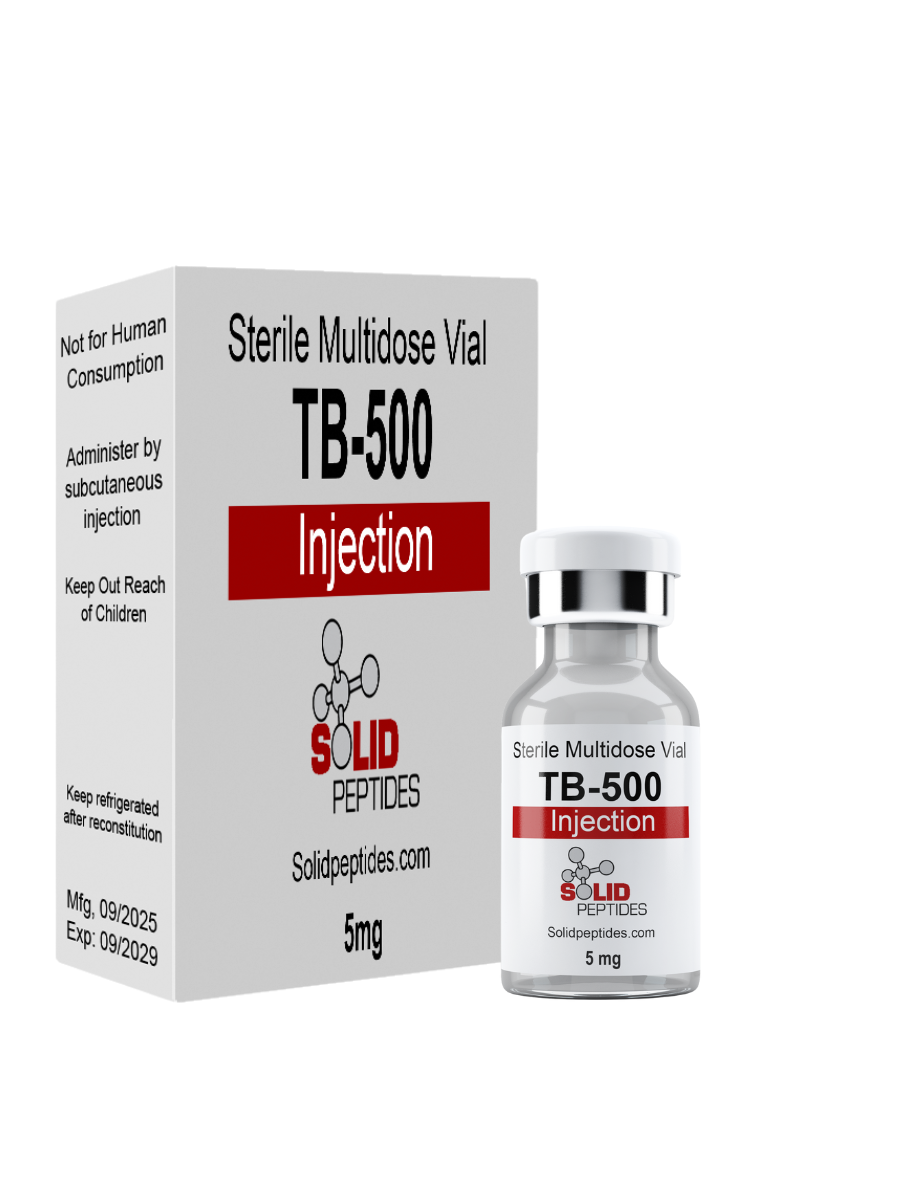
Hover to zoom
Identity Verified: LC-MS
(0 Reviews)
TB-500 (5 mg)
- Thymosin Beta-4 Synthetic Analogue: 43-amino acid peptide (Ac-SDKPDMAEIEKFDKSKLKKTETQEKNPLPSKETIEQEKQAGES-OH); N-terminal acetylation for enhanced metabolic stability; ≥98% purity by HPLC; 2,000+ peer-reviewed publications
- Multi-Pathway Research Profile: G-actin sequestration (Kd 0.5–0.7 μM, conserved ¹⁷LKKTETQ²³ binding domain), VEGF upregulation via Wnt/β-catenin/Lef-1, PI3K/Akt/eNOS pathway, NF-κB inhibition, TGF-β1 suppression
- Active Research Domains: Angiogenesis and vascular biology, cardiovascular tissue research, neuroprotection models, pulmonary and hepatic fibrosis, actin cytoskeletal dynamics; supplied as lyophilized powder for in vitro research
- Mechanistic pathway studies
- In vitro receptor profiling
- HPLC verified identity and purity
$39.00In Stock
Ships same-day if ordered before 2PM EST
1
Encrypted Checkout
Global Express
Research Overview
TB-500 (Thymosin Beta-4 Acetate; CAS 77591-33-4) is a synthetic 43-amino acid peptide (Ac-SDKPDMAEIEKFDKSKLKKTETQEKNPLPSKETIEQEKQAGES-OH) derived from naturally occurring thymosin beta-4, a protein representing 70–80% of beta-thymosin peptides in mammalian cells and one of the most abundant intracellular proteins in eukaryotic tissues, with concentrations reaching 500 μM in certain cell types. Originally isolated from bovine thymus in 1966, thymosin beta-4 functions as the primary regulator of G-actin cytoskeletal dynamics. The N-terminal acetylation of TB-500 confers resistance to aminopeptidase degradation, extending metabolic stability relative to the native peptide. The conserved actin-binding domain at positions 17–23 (¹⁷LKKTETQ²³) mediates high-affinity G-actin sequestration (Kd 0.5–0.7 μM, 1:1 stoichiometric complex). Supplied as a lyophilized powder for in vitro research, intended strictly for qualified researchers. Certificate of Analysis (CoA) provided with every lot.
Principal investigational domains include actin cytoskeletal dynamics, angiogenesis via VEGF and Wnt/β-catenin/Lef-1 signaling, cardiovascular tissue research, neuroprotection in traumatic brain injury and neurodegeneration models, anti-fibrotic activity via TGF-β1/Smad pathway suppression, and NF-κB inhibition. Choate et al. (2025, Nature Communications) identified TMSB4X gene downregulation in familial Alzheimer disease organoids and patient neurons; thymosin beta-4 treatment rescued neurodevelopmental deficits and reduced amyloid-beta formation in brain organoids; AAV-TMSB4X gene therapy in 5xFAD transgenic mice reduced amyloid plaques, decreased glial activation, and alleviated neuronal hyperexcitability. Zhang et al. (2023, Int J Mol Sci) demonstrated recombinant Tβ4 alleviated lung function impairment in pulmonary fibrosis models and inhibited lung cancer tumor growth via JAK2-STAT3 pathway suppression; Tβ4-overexpressing mice showed significantly increased MMP-2 and VEGF expression while knockout mice showed dramatic decreases. Li et al. (2024) demonstrated aerosol recombinant Tβ4 alleviated bleomycin-induced pulmonary fibrosis at different stages via TGF-β1 signaling pathway suppression.
Over 2,000 peer-reviewed publications reference thymosin beta-4. Dou et al. (2021, Frontiers in Endocrinology) comprehensively reviewed angiogenesis, cell proliferation, apoptosis inhibition, and anti-inflammatory mechanisms. Philp et al. (2022, Expert Opinion on Biological Therapy) documented anti-fibrotic mechanisms including TGF-β pathway suppression, macrophage polarization modulation, and organized collagen fiber promotion across liver, lung, heart, and kidney fibrosis models. Thymosin beta-4 is not approved by the FDA or EMA for human use. ≥98% purity by HPLC.
Primary Research Applications
Actin Cytoskeletal Dynamics Research (G-actin sequestration, F-actin polymerization kinetics, ¹⁷LKKTETQ²³ binding domain characterization)
Cell Migration and Motility Studies (endothelial cell recruitment, fibroblast chemotaxis, lamellipodia formation, focal adhesion dynamics)
Angiogenesis and Vascular Biology (VEGF/Wnt/β-catenin/Lef-1 signaling, MMP-2 upregulation, endothelial cell proliferation)
Cardiovascular Tissue Research (cardiac ischemia-reperfusion models, epicardial progenitor cell activation, coronary vessel biology)
Neuroprotection and Neurodegeneration Research (TBI models, Alzheimer disease models, amyloid-beta research, neurogenesis)
Pulmonary Fibrosis Research (TGF-β1 signaling, JAK2/STAT3 pathway, bleomycin-induced fibrosis models, alveolar biology)
Hepatic Fibrosis and Stellate Cell Biology (TGF-β/Smad pathway, carbon tetrachloride models, hepatic stellate cell activation)
Anti-Inflammatory Research (NF-κB inhibition, RelA/p65 nuclear translocation, inflammatory cytokine modulation)
Corneal and Ophthalmic Research (corneal epithelial migration, dry eye models, bacterial keratitis research)
Stem Cell and Tissue Engineering Research (adipose-derived stem cell biology, progenitor cell mobilization, organoid models)
Mechanism of Action
G-Actin Sequestration and Cytoskeletal Regulation
Primary Actin-Binding Mechanism — TB-500 binds monomeric G-actin (globular actin) with high affinity (Kd 0.5–0.7 μM), forming a 1:1 stoichiometric complex. The conserved actin-binding domain at positions 17–23 (¹⁷LKKTETQ²³) mediates G-actin sequestration, preventing spontaneous polymerization into filamentous F-actin structures. By maintaining a reservoir of unpolymerized actin monomers, TB-500 enables rapid cytoskeletal remodeling in response to cellular signals — growth factors, chemotactic stimuli, and mechanical stress — that is essential for cell migration, adhesion, division, and intracellular trafficking. The peptide adopts a largely unstructured conformation in solution, providing conformational plasticity for high-affinity binding to G-actin and diverse cellular partners including PINCH and ILK proteins at focal adhesions.
Cell Migration and Endothelial Cell Recruitment
Directed Cell Motility and Progenitor Cell Homing — By controlling actin dynamics, TB-500 promotes directed cell migration of multiple cell types: vascular endothelial cells to damaged tissue for new capillary formation, fibroblasts for connective tissue repair and extracellular matrix remodeling, and stem/progenitor cells to injury sites. The mechanism involves rapid cytoskeletal reorganization enabling lamellipodia formation, focal adhesion turnover, and directional motility. TB-500 interacts with PINCH (particularly interesting new cysteine-histidine rich protein) to regulate integrin signaling and modulates integrin-linked kinase (ILK) activity at focal adhesions.
Angiogenesis and VEGF Pathway Activation
Vascular Endothelial Growth Factor Upregulation — Independent of its actin-binding function, TB-500 directly upregulates vascular endothelial growth factor (VEGF) expression at both mRNA and protein levels via the Wnt/β-catenin/Lef-1 signaling pathway (Dou et al., 2021, Front Endocrinol). TB-500 also upregulates insulin-like growth factor (IGF-1) for cell survival and proliferation, enhances fibroblast growth factor (FGF) expression for tissue remodeling, and increases matrix metalloproteinase-2 (MMP-2) expression to facilitate extracellular matrix degradation and vascular sprouting. Zhang et al. (2023) demonstrated significantly increased MMP-2 and VEGF mRNA and protein in Tβ4-overexpressing mice and dramatic decreases in Tβ4 knockout mice.
PI3K/Akt/eNOS Survival Pathway and MAPK Signaling
Cell Survival and Proliferation Signaling — TB-500 activates Akt (protein kinase B) through PI3K-dependent phosphorylation, promoting cell survival and inhibiting apoptosis. It enhances endothelial nitric oxide synthase (eNOS) activity, increasing nitric oxide production for vascular function, and increases phosphorylation of pro-survival Bcl-2 family proteins. TB-500 also activates ERK1/2 and p38 MAPK pathways supporting cellular repair and modulates JNK signaling in a context-dependent manner. The peptide interacts with PINCH and ILK at focal adhesions to modulate integrin-mediated ECM-to-cytoskeleton signaling.
NF-κB Inhibition and Anti-Inflammatory Activity
Inflammatory Gene Suppression — Thymosin beta-4 inhibits TNF-α-induced NF-κB activation by blocking RelA/p65 nuclear translocation and targeting to the cognate κB site in the IL-8 gene promoter (PMC, 2011). This mechanism reduces pro-inflammatory cytokine expression including IL-1β, TNF-α, and IL-6 at tissue sites, decreases macrophage infiltration and pro-fibrotic M2 macrophage polarization, and contributes to the anti-inflammatory properties demonstrated across multiple tissue injury models.
Anti-Fibrotic TGF-β Pathway Modulation
Fibrosis Suppression via TGF-β1/Smad Signaling — TB-500 reduces fibrosis and pathological scar formation through TGF-β pathway suppression: decreasing TGF-β1 expression (master regulator of fibroblast-to-myofibroblast differentiation), reducing TGFβ receptor type II (TGFβR II) expression to attenuate downstream Smad signaling, and inhibiting Smad2 and Smad3 phosphorylation and nuclear translocation to prevent fibrotic gene transcription. TB-500 decreases myofibroblast populations and α-smooth muscle actin (α-SMA) expression while promoting organized collagen alignment. Li et al. (2024) demonstrated suppression of lung fibroblast proliferation and migration via TGF-β1 pathway in pulmonary fibrosis; a Nature Scientific Reports (2017) study on carbon tetrachloride-induced liver fibrosis showed reduced TGF-β1, TGFβR II, Smad2, and Smad3 in liver tissues of treated mice with more organized collagen alignment and significantly reduced scarring.
“Mechanistic summaries on this page are provided for laboratory reference and should be interpreted within controlled experimental settings only.”
Preclinical Research Summary
TB-500 is supplied as a lyophilized powder for in vitro research, studied in cell culture systems, rodent models, and limited large-animal models. Over 2,000 peer-reviewed publications reference thymosin beta-4. Intended strictly for qualified researchers.
Neurological Research: Choate et al. (2025, Nature Communications) identified TMSB4X gene downregulation in familial Alzheimer disease organoids and patient neurons; thymosin beta-4 treatment rescued neurodevelopmental deficits and reduced amyloid-beta formation in brain organoids; in 5xFAD transgenic mice, AAV-TMSB4X gene therapy reduced amyloid plaques, decreased glial activation, and alleviated neuronal hyperexcitability. Shen et al. (2013) demonstrated that TB-500 treatment initiated 6 hours post-traumatic brain injury significantly reduced cortical lesion volume and improved sensorimotor functional recovery in rat models.
Pulmonary and Respiratory Research: Li et al. (2024) demonstrated aerosol administration of recombinant human thymosin beta-4 alleviated bleomycin-induced pulmonary fibrosis at different stages in mice; in vitro studies showed suppression of lung fibroblast proliferation and migration via TGF-β1 signaling pathway. Zhang et al. (2023, Int J Mol Sci) showed recombinant Tβ4 alleviated lung function impairment and alveolar structure damage in pulmonary fibrosis models and additionally inhibited lung cancer tumor growth via JAK2-STAT3 pathway suppression; Tβ4-overexpressing mice showed significantly increased MMP-2 and VEGF expression while knockout mice showed dramatic decreases.
Angiogenesis and Vascular Research: Dou et al. (2021, Front Endocrinol) demonstrated direct VEGF upregulation via Wnt/β-catenin/Lef-1 pathway, enhanced endothelial cell proliferation and migration through VEGF receptor signaling, upregulated IGF-1 and FGF, and increased MMP-2 expression. Xiong et al. (2022, Cardiovascular Research) demonstrated thymosin beta-4 promotes cardiac regeneration post-ischemic injury and activates epicardial progenitor cells.
Anti-Fibrotic and Hepatic Research: Philp et al. (2022) documented anti-fibrotic mechanisms across liver, lung, heart, and kidney fibrosis models: TGF-β pathway suppression, decreased macrophage infiltration, reduced CTGF activation, and prevention of fibroblast-to-myofibroblast conversion. A Nature Scientific Reports (2017) study on carbon tetrachloride-induced liver fibrosis showed Tβ4 reduced TGF-β1, TGFβR II, Smad2, Smad3 in liver tissues; more organized collagen alignment, lower inflammatory cytokines, and significantly reduced scarring vs. controls.
Pharmacokinetics and Safety: The N-terminal acetylation protects against aminopeptidase degradation, extending plasma half-life. TB-500 is stable in lyophilized form at −18°C for 24 months and retains activity following reconstitution at 2–8°C for up to 7 days. In vivo pharmacokinetics are dose-dependent with increasing half-life at higher doses and no accumulation after continuous administration. Multiple animal studies across mammalian species demonstrate favorable tolerability with no major adverse events at therapeutic doses. Not for human or veterinary consumption, diagnosis, treatment, prevention, or cure of any condition.
Academic References
- Choate JR et al. (2025). Thymosin beta 4 as an Alzheimer disease intervention target identified using human brain organoids. Nat Commun.
- Li Y et al. (2024). Inhaled exogenous thymosin beta 4 suppresses bleomycin-induced pulmonary fibrosis in mice via TGF-β1 signalling pathway. PubMed.
- Wu X et al. (2024). In Vitro Study of Thymosin Beta 4 Promoting Transplanted Fat Survival by Regulating Adipose-Derived Stem Cells. PubMed.
- Zhang Y et al. (2023). Exogenous Thymosin Beta 4 Suppresses IPF-Lung Cancer in Mice. Int J Mol Sci.
- Dou Y et al. (2021). Progress on the Function and Application of Thymosin β4. Front Endocrinol.
- Philp D et al. (2022). Thymosin β4 and the anti-fibrotic switch. Expert Opin Biol Ther.
- Goldstein AL et al. (2012). Thymosin β4: a multi-functional regenerative peptide. Basic properties and clinical applications. Expert Opin Biol Ther.
- Shen LH et al. (2013). Neuroprotective effects of Thymosin beta 4 in experimental model of stroke. PMC.
- Xiong YY et al. (2022). Thymosin β4 and prothymosin alpha promote cardiac regeneration post-ischaemic injury. Cardiovasc Res. 119(3):802.
- Malinda KM et al. (1999). Thymosin beta4 accelerates wound healing. J Invest Dermatol. 113(3):364–368.
This product is intended exclusively for in vitro laboratory research by qualified professionals. Not for human consumption. Not approved by the FDA.