Research Use Only: This product is supplied for laboratory research and in-vitro studies. Not for human or veterinary administration.
Hover to zoom
Identity Verified: LC-MS
(0 Reviews)
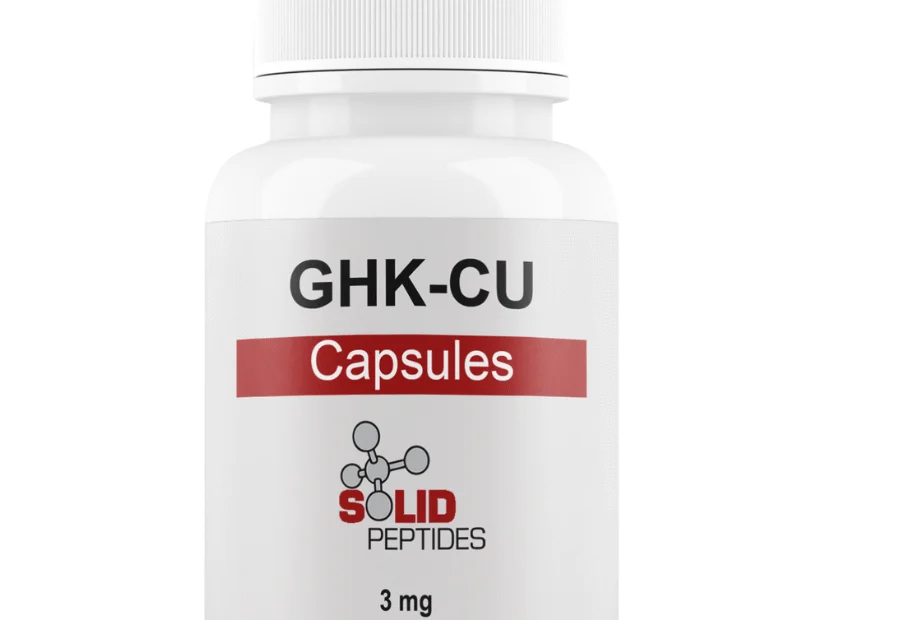
GHK-Cu Capsules (3mg) 60 capsules
- GHK-Cu Oral Capsules: Gly-His-Lys copper(II) complex, 3mg/capsule × 60, ≥98% purity by HPLC
- TGF-β / NF-κB Pathway Research: ECM remodeling, NF-κB anti-inflammatory signaling studies
- Oral Pharmacokinetics Studies: GI bioavailability and SIRT1/STAT3 colitis-model research
- Mechanistic pathway studies
- In vitro receptor profiling
- HPLC verified identity and purity
$84.00In Stock
Ships same-day if ordered before 2PM EST
1
Encrypted Checkout
Global Express
Research Overview
GHK-Cu (Glycyl-L-Histidyl-L-Lysine Copper(II)) is a naturally occurring tripeptide-copper complex first isolated from human plasma albumin in 1973 by Dr. Loren Pickart at UCSF. Supplied as oral capsules for in vitro research and intended strictly for qualified researchers, the compound has accumulated more than 100 peer-reviewed publications spanning extracellular matrix remodeling, anti-inflammatory signaling, antioxidant defense, neuroprotection, and genome-wide gene-expression modulation. Endogenous GHK-Cu is present in human plasma at approximately 200 ng/mL at age 20, declining to approximately 80 ng/mL by age 60.
Analysis using the Broad Institute Connectivity Map demonstrated that GHK modulates expression of over 4,000 human genes (31.2% of the genome), shifting gene-expression patterns in aged or diseased cell systems toward healthier profiles. The copper(II) ion coordinates through a characteristic 3N1O equatorial arrangement with the imidazole nitrogen of histidine, the alpha-amino nitrogen of glycine, and a deprotonated amide nitrogen, providing a copper-binding affinity (log₁₀ K = 16.44) comparable to albumin's high-affinity copper-transport site.
This oral capsule format (3mg × 60) is provided for Certificate of Analysis (CoA) provided with every lot. Research applications include oral pharmacokinetic profiling, gastrointestinal epithelial-barrier investigation via the SIRT1/STAT3 pathway (Mao et al., 2025 oral gavage colitis model), NF-κB and p38 MAPK anti-inflammatory pathway studies, and Nrf2-mediated antioxidant-defense research.
Primary Research Applications
Oral Peptide Pharmacokinetics Research
GI Epithelial Barrier Studies
NF-κB Anti-Inflammatory Pathway Research
TGF-β and ECM Remodeling Investigation
Nrf2 Antioxidant Pathway Studies
Genome-Wide Gene Expression Research
Neuroprotection Mechanism Research
Aging Biology and Gerontology Models
Mechanism of Action
TGF-β Pathway Activation and ECM Remodeling
TGF-β / Lysyl Oxidase — At picomolar to nanomolar concentrations (10⁻¹² to 10⁻⁹ M), GHK-Cu activates TGF-β signaling and stimulates fibroblast synthesis of collagen I and III, elastin, proteoglycans, and decorin. The copper ion serves as a cofactor for lysyl oxidase (crosslinking collagen and elastin) and lysyl hydroxylase, while simultaneously modulating the balance between matrix metalloproteinases (MMPs) and tissue inhibitors (TIMPs).
NF-κB and p38 MAPK Anti-Inflammatory Signaling
NF-κB p65 / p38 Suppression — GHK-Cu suppresses phosphorylation and nuclear translocation of NF-κB p65 and inhibits phosphorylation of p38 MAPK, reducing downstream TNF-α, IL-6, and IL-1β in tissue models. A 2025 oral gavage colitis study (Mao et al.) identified SIRT1/STAT3 as an additional intestinal pathway: GHK-Cu upregulated SIRT1, suppressed p-STAT3, inhibited RORγt (reducing Th17 differentiation), and restored tight junction proteins ZO-1 and Occludin.
Nrf2 Antioxidant Defense
Nrf2 / SOD / Ferritin — GHK-Cu activates the Nrf2 pathway, enhancing expression of superoxide dismutase through copper cofactor delivery. Direct mechanisms include scavenging of lipid peroxidation by-products (4-HNE, acrolein, MDA) and reducing ferritin iron release by 87%, limiting Fenton-type oxidative reactions (Pickart et al., 2012).
Genome-Wide Transcriptional Modulation
hTERT / DNA Repair / Ubiquitin-Proteasome — Broad Institute Connectivity Map analysis identified ≥50% expression changes in 31.2% of human genes. Key findings include upregulation of 47 DNA-repair genes, 16 of 18 antioxidant genes, and 41 ubiquitin-proteasome genes. Notable neuronal gene upregulation includes OPRM1 (+1294%), TP73 (+938%), and KCND1 (+845%). IL17A (−1018%) and TNF (−115%) were suppressed.
VEGF and Angiogenesis Signaling
VEGF / bFGF Induction — GHK-Cu at concentrations as low as 1 nM increases VEGF and basic FGF expression, stimulating proliferation of human umbilical vein endothelial cells (HUVECs) and promoting new blood vessel formation — relevant to wound-healing and tissue-oxygenation research models.
“Mechanistic summaries on this page are provided for laboratory reference and should be interpreted within controlled experimental settings only.”
Preclinical Research Summary
GHK-Cu is supplied as oral capsules for in vitro research and is studied in cell and animal models. In Mao et al. (2025), oral gavage administration (20 mg/kg) in DSS-induced colitis mice for 14 days demonstrated alleviation of colon shortening, reduction in disease activity index scores, and suppression of TNF-α, IL-6, and IL-1β. The SIRT1/STAT3 pathway was identified as a novel intestinal mechanism, with restoration of tight junction proteins ZO-1 and Occludin. Cell viability in colon epithelial cells was not significantly reduced at 62.5 μmol/L GHK-Cu over 24 hours by MTT assay.
Neurological research by Tucker et al. (2023 preprints) demonstrated that intranasal GHK-Cu (15 mg/kg daily) in aging C57BL/6 mice reduced neuroinflammation markers (MCP-1) and axonal damage markers (NFL-1) in frontal cortex and enhanced spatial memory in cognitive paradigms. In 5xFAD transgenic mice, intranasal GHK-Cu (3×/week for 3 months) reduced amyloid plaque numbers in frontal cortex and hippocampus. Genome-wide transcriptomic analysis (Broad Institute Connectivity Map) documented 31.2% of human genes at ≥50% expression change, including upregulation of 47 DNA-repair genes. Most data are from animal and cell-based systems; large-scale independent human clinical trials have not been performed for oral capsule delivery.
Academic References
- Mao S et al. (2025). Exploring the beneficial effects of GHK-Cu on an experimental model of colitis and the underlying mechanisms. Front Pharmacol.
- Pickart L, Margolina A (2018). Regenerative and Protective Actions of the GHK-Cu Peptide in the Light of the New Gene Data. Int J Mol Sci.
- Pickart L et al. (2017). The Effect of the Human Peptide GHK on Gene Expression Relevant to Nervous System Function and Cognitive Decline. Brain Sciences.
- Pickart L et al. (2012). The Human Tripeptide GHK-Cu in Prevention of Oxidative Stress and Degenerative Conditions of Aging. Oxid Med Cell Longev.
- Pickart L et al. (2015). GHK Peptide as a Natural Modulator of Multiple Cellular Pathways in Skin Regeneration. BioMed Res Int.
- Tucker M et al. (2023). Intranasal GHK peptide enhances resilience to cognitive decline in aging mice. bioRxiv.
- Ugurlu T et al. (2011). In vitro evaluation of compression-coated GHK-Cu-loaded microparticles for colonic drug delivery. Drug Dev Ind Pharm.
- Adnan SB et al. (2025). Exploring the Role of Tripeptides in Wound Healing and Skin Regeneration: A Comprehensive Review. Int J Med Sci.
This product is intended exclusively for in vitro laboratory research by qualified professionals. Not for human consumption. Not approved by the FDA.
Published Research Briefs
Our research team has published evidence-checked briefs covering the science behind this compound. Each brief reviews primary sources and grades claims independently.