Research Use Only: This product is supplied for laboratory research and in-vitro studies. Not for human or veterinary administration.
Hover to zoom
Identity Verified: LC-MS
(0 Reviews)
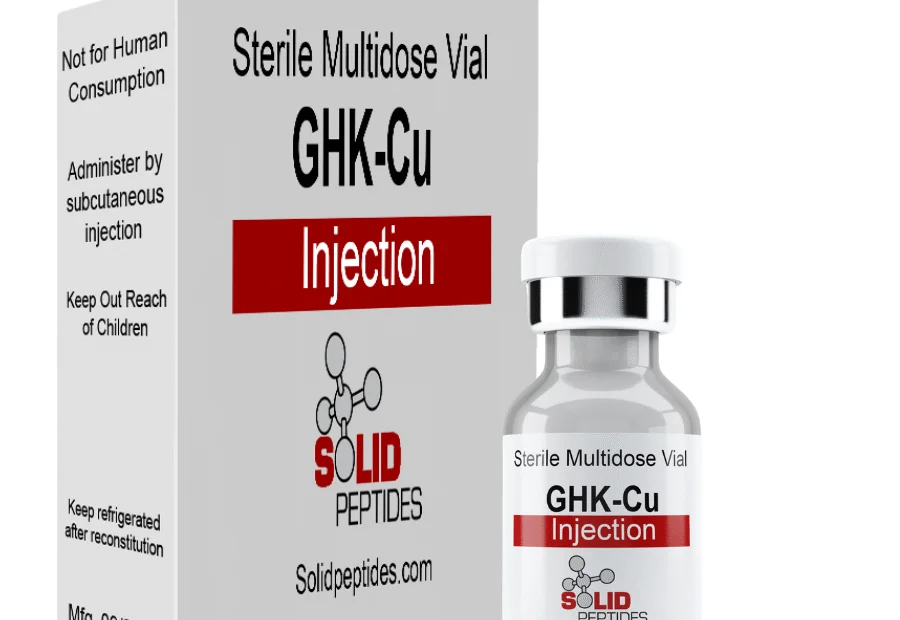
GHK-Cu (50 mg)
- Copper Tripeptide-1: Gly-His-Lys copper(II) complex, ≥98% purity by HPLC, naturally occurring plasma peptide
- Broad Gene Regulation: Modulates 31.2% of human genes (>4,000 genes) including TGF-β/Smad pathway activation
- ECM and Tissue Research: Collagen synthesis, MMP modulation, anti-inflammatory, and antioxidant pathway studies
- Mechanistic pathway studies
- In vitro receptor profiling
- HPLC verified identity and purity
$39.00In Stock
Ships same-day if ordered before 2PM EST
1
Encrypted Checkout
Global Express
Research Overview
GHK-Cu (glycyl-L-histidyl-L-lysine copper(II) complex) is a naturally occurring tripeptide-copper coordination compound first isolated from human plasma albumin in 1973 by Dr. Loren Pickart at the University of California, San Francisco. The discovery originated from observations that a fraction of human albumin caused aged human liver tissue to synthesize proteins with patterns resembling younger tissue, providing an early indication of GHK's regenerative potential. The peptide is present endogenously in human plasma at approximately 200 ng/mL at age 20, declining to approximately 80 ng/mL by age 60—a decline that parallels observable decreases in regenerative capacity throughout the human lifespan.
Supplied as a lyophilized powder for in vitro research and intended strictly for qualified researchers, GHK-Cu has generated over 150 peer-reviewed publications spanning wound healing, tissue regeneration, skin biology, pulmonary medicine, neuroscience, and gene expression research. Genomic studies have revealed that GHK-Cu modulates expression of approximately 31.2% of human genes (over 4,000 genes), positioning it as one of the most broadly active naturally occurring small-molecule gene regulators documented to date (Pickart & Margolina, 2018). Its multifaceted mechanisms include collagen synthesis stimulation, matrix metalloproteinase modulation, anti-inflammatory signaling through NF-κB and p38 MAPK inhibition, antioxidant defense via SOD activation and Nrf2 pathway, and angiogenesis promotion through VEGF and FGF-2 upregulation.
The Cu(II) ion coordinates through the nitrogen of the histidine imidazole side chain, the alpha-amino nitrogen of glycine, and the deprotonated amide nitrogen of the glycine-histidine peptide bond, creating a characteristic 3N1O coordination geometry that produces the compound's distinctive blue-green coloration. The GHK-Cu complex exhibits exceptionally high thermodynamic stability with a binding constant of log₁₀ K = 16.44 and a conditional dissociation constant (Kd) of 7.0 ± 1.0 x 10⁻¹⁴ M, ensuring the complex remains intact under physiological conditions. A 2025 comprehensive review noted a critical knowledge gap: most GHK research has been performed in laboratory and animal models, with insufficient human clinical validation for broad therapeutic claims (Adnan et al., 2025).
Primary Research Applications
Extracellular Matrix Synthesis and Collagen Production
Wound Healing and Tissue Regeneration
Pulmonary Fibrosis and Acute Lung Injury
Anti-inflammatory Signaling Pathways
Antioxidant Defense and Oxidative Stress
Angiogenesis and Vascular Growth Factors
Genome-Wide Gene Expression Modulation
Protein Aggregation and CNS Protection
Mechanism of Action
Collagen and Extracellular Matrix Synthesis via TGF-β Pathway
TGF-β Signaling Activation — GHK-Cu activates the transforming growth factor-beta (TGF-β) signaling cascade, a critical pathway for tissue regeneration and extracellular matrix (ECM) production. Studies using the Broad Institute's Connectivity Map demonstrated that GHK reverses gene expression changes associated with emphysematous tissue destruction by activating TGF-β signaling. In lung fibroblasts derived from COPD patients, GHK treatment restored impaired collagen gel contraction and remodeling—effects comparable to direct TGF-β administration (Pickart et al., 2015). At picomolar to nanomolar concentrations (10⁻¹² to 10⁻⁹ M), GHK-Cu directly increases fibroblast production of collagen types I and III, elastin, proteoglycans, glycosaminoglycans, and decorin.
Matrix Metalloproteinase (MMP) Modulation
MMP/TIMP Balance Regulation — GHK-Cu exhibits dual regulatory control over the ECM remodeling machinery, simultaneously enhancing synthesis of new matrix components while orchestrating controlled degradation of damaged ones. The peptide modulates the balance between matrix metalloproteinases (MMPs) and their tissue inhibitors (TIMPs), upregulating MMPs when damaged proteins require removal and downregulating excessive MMP activity to prevent pathological tissue destruction. In ischemic wound models, GHK-Cu treatment decreased MMP-2 and MMP-9 concentrations while reducing TNF-β levels, resulting in faster healing and improved tissue organization. In bleomycin-induced pulmonary fibrosis models, GHK-Cu significantly reversed the MMP-9/TIMP-1 imbalance (Ma et al., 2020).
Anti-Inflammatory Signaling (NF-κB and p38 MAPK Inhibition)
Pro-inflammatory Pathway Suppression — GHK-Cu demonstrates potent anti-inflammatory effects through suppression of multiple pro-inflammatory signaling cascades. The peptide blocks LPS-induced nuclear translocation of NF-κB p65 and suppresses phosphorylation at Ser536, reducing transcription of pro-inflammatory genes. GHK-Cu significantly inhibits LPS-induced phosphorylation of p38 MAPK, dampening inflammatory signaling cascades in lung tissue, and reduces TNF-α and IL-6 production both in vitro and in vivo while decreasing myeloperoxidase (MPO) activity, a marker of neutrophil infiltration (Park et al., 2016). In a colitis model, GHK-Cu upregulated SIRT1 protein expression and suppressed phosphorylated STAT3, inhibiting RORγt expression and Th17 cell differentiation (Mao et al., 2025).
Antioxidant Defense (SOD Activation, Nrf2, and Free Radical Scavenging)
Multi-Pathway Antioxidant Enhancement — GHK-Cu enhances cellular antioxidant defenses through multiple complementary mechanisms. The peptide increases superoxide dismutase (SOD) activity in lung tissue while decreasing oxidative stress markers during LPS-induced acute lung injury (Park et al., 2016). GHK inactivates damaging lipid peroxidation byproducts including 4-hydroxynonenal (4-HNE), acrolein, and malondialdehyde (MDA), and in Caco-2 cells, GHK reduced hydroxyl and peroxyl radical levels more effectively than carnosine and reduced glutathione. GHK completely blocked Cu(II)-dependent oxidation of low-density lipoproteins, a critical process in atherosclerosis research (Pickart et al., 2012). The peptide also activates the Nrf2 signaling pathway, upregulating expression of cytoprotective antioxidant genes (Ma et al., 2020).
VEGF-Mediated Angiogenesis and Genome-Wide Gene Regulation
Vascular Growth Factor Upregulation — GHK-Cu at concentrations as low as 1 nM increases expression of vascular endothelial growth factor (VEGF) and basic fibroblast growth factor (bFGF/FGF-2) in irradiated human dermal fibroblasts. GHK-Cu-liposomes promoted human umbilical vein endothelial cell (HUVEC) proliferation with a 33.1% increased rate, while also enhancing expression of cell cycle proteins CDK4 and CyclinD1 (Wang et al., 2017). Studies using the Broad Institute's Connectivity Map revealed that GHK induces significant changes in approximately 31.2% of human genes (over 4,000 genes), with 59% upregulated and 41% downregulated, representing one of the most extensive gene regulatory profiles documented for any naturally occurring small molecule. Key effects include 41 ubiquitin-proteasome genes upregulated, 47 DNA repair genes upregulated, 408 neuron-related genes upregulated, and activation of 10 caspase genes and 84 DNA repair-related genes (Pickart & Margolina, 2018).
“Mechanistic summaries on this page are provided for laboratory reference and should be interpreted within controlled experimental settings only.”
Preclinical Research Summary
GHK-Cu is supplied as a lyophilized powder for in vitro research and is studied in cell and animal models. In pulmonary fibrosis models, GHK-Cu dose-dependently reversed bleomycin-induced increases in TGF-β1, phospho-Smad2, phospho-Smad3, and IGF-1 expression, restored E-cadherin expression while reducing vimentin, fibronectin, and α-smooth muscle actin (epithelial-mesenchymal transition reversal), and significantly reversed the MMP-9/TIMP-1 imbalance while modulating Nrf2, NF-κB, and TGFβ1/Smad2/3 pathways simultaneously (Zhou et al., 2017; Ma et al., 2020). In acute lung injury models, GHK-Cu blocked NF-κB p65 nuclear translocation and inhibited p38 MAPK phosphorylation, reduced TNF-α, IL-6, ROS production, and neutrophil infiltration (MPO activity) in LPS-induced acute lung injury, and increased superoxide dismutase (SOD) activity while decreasing oxidative stress markers (Park et al., 2016).
In wound healing models, nanoscale GHK-Cu-liposomes promoted HUVEC proliferation with a 33.1% increased rate, enhanced VEGF, FGF-2, CDK4, and CyclinD1 expression, and shortened wound healing time to 14 days post-scald injury (Wang et al., 2017). In a DSS-induced colitis model, GHK-Cu modulated colitis-associated body-composition changes, reduced disease activity scores, alleviated colonic edema, upregulated SIRT1 protein expression, suppressed phosphorylated STAT3, inhibited RORγt expression and Th17 cell differentiation, and upregulated tight junction proteins ZO-1 and Occludin; effects across measured intestinal pathway endpoints were broadly similar to those observed in the 5-aminosalicylate reference group (Mao et al., 2025).
In neurodegenerative research models, GHK prevented copper- and zinc-induced bovine serum albumin aggregation and resolved existing aggregation through resolubilization, attenuated enhanced copper toxicity during inflammatory conditions, and demonstrated cytoprotective effects in CNS cell cultures (Min et al., 2024). Human evidence derives primarily from investigator-initiated cosmetic studies rather than registered clinical trials: a facial cream containing GHK-Cu applied for 12 weeks to 71 women with mild to advanced photoaging increased skin density and thickness and reduced laxity (Pickart et al., 2015). Comprehensive reviews note a critical knowledge gap: most GHK research has been performed in vitro or animal models, with insufficient human clinical validation for broad therapeutic claims (Adnan et al., 2025).
Academic References
- Pickart L, Margolina A (2018). Regenerative and Protective Actions of the GHK-Cu Peptide in the Light of the New Gene Data. International Journal of Molecular Sciences.
- Park JR et al. (2016). The tri-peptide GHK-Cu complex ameliorates lipopolysaccharide-induced acute lung injury in mice. Oncotarget.
- Zhou XM et al. (2017). GHK Peptide Inhibits Bleomycin-Induced Pulmonary Fibrosis in Mice by Suppressing TGFβ1/Smad-Mediated Epithelial-to-Mesenchymal Transition. Frontiers in Pharmacology.
- Ma WH et al. (2020). Protective effects of GHK-Cu in bleomycin-induced pulmonary fibrosis via anti-oxidative stress and anti-inflammation pathways. Life Sciences.
- Mao S et al. (2025). Exploring the beneficial effects of GHK-Cu on an experimental model of colitis and the underlying mechanisms. Frontiers in Pharmacology.
- Min JH et al. (2024). Glycyl-L-histidyl-L-lysine prevents copper- and zinc-induced protein aggregation and CNS cell death in vitro. Metallomics.
- Wang X et al. (2017). GHK-Cu-liposomes accelerate scald wound healing in mice by promoting cell proliferation and angiogenesis. Wound Repair and Regeneration.
- Pickart L et al. (2015). GHK Peptide as a Natural Modulator of Multiple Cellular Pathways in Skin Regeneration. BioMed Research International.
- Pickart L et al. (2012). The human tri-peptide GHK in prevention of oxidative stress and degenerative conditions. Oxidative Medicine and Cellular Longevity.
- Adnan SB et al. (2025). Exploring the Role of Tripeptides in Wound Healing and Skin Regeneration: A Comprehensive Review. International Journal of Medical Sciences.
This product is intended exclusively for in vitro laboratory research by qualified professionals. Not for human consumption. Not approved by the FDA.
Published Research Briefs
Our research team has published evidence-checked briefs covering the science behind this compound. Each brief reviews primary sources and grades claims independently.